

Your watch tells time. But the hands on the dial tell your story. Whether you’re personalizing a timepiece for yourself or sourcing a bespoke corporate gift, custom watch hands are one of the most impactful changes you can make. They shift the entire feel of a watch without requiring a full rebuild. In this guide, you’ll learn exactly why enthusiasts upgrade their hands, what tools you need, how to choose compatible parts, and how to complete the swap safely. You’ll also know when to call in a professional.
Table of Contents
- Why customize watch hands?
- Essential tools and materials
- How to choose compatible watch hands
- Step-by-step: Replacing your watch hands safely
- Testing, troubleshooting, and when to seek professional help
- Custom hands: Value, risks, and inspiration
- Ready to customize your dream watch?
- Frequently asked questions
Key Takeaways
| Point | Details |
|---|---|
| Personalized expression | Custom hands transform any watch into a true reflection of your style or brand. |
| Precise fit matters | Always match hands to your movement’s specs to prevent problems or damage. |
| DIY vs. professional | DIY is great for enthusiast pieces but professionals are best for luxury or vintage. |
| Finishes and materials | Explore materials like brass or carbon fiber, and finishes such as Super Luminova or PVD. |
| Budget and value | Affordable sets start at $8 while high-end custom options are available for collectors. |
Why customize watch hands?
Watch hands are the most visible element on any dial. Changing them is one of the fastest ways to make a standard model feel entirely your own. If you’re building your own watch from scratch or upgrading an existing piece, hands are where personality shows up most clearly.
Here’s why enthusiasts and collectors choose to customize:
- Personal style: Swap factory hands for a color, finish, or shape that matches your aesthetic.
- Legibility: Some aftermarket hands offer better contrast or lume (luminous material) than stock options.
- Corporate gifting: Custom hands with brand colors or unique finishes reinforce identity on a high-end gift.
- Restoration: Vintage collectors often replace worn or damaged hands to bring a piece back to life.
- Modernizing classics: A set of galvanic blue or bi-color hands can refresh an older movement without touching the case.
Customization suits enthusiasts modding affordable movements, but it risks warranties on luxury pieces. If your watch is still under warranty, a DIY hand swap could void it entirely. Custom producers create bespoke hands with advanced materials and finishes, giving you options that go far beyond what any factory offers.
Pro Tip: If you’re customizing for a corporate gift, order a sample set first. Verify the finish and color match your brand guidelines before committing to a full batch.
Now that you know what you’ll gain, let’s detail what you’ll need before starting.
Essential tools and materials
The right tools make the difference between a clean swap and a damaged movement. Don’t skip any of these.
Must-have tools:
- Hand remover (lever-style): Lifts hands off the cannon pinion without bending them.
- Hand press: Seats new hands firmly and evenly onto the pinion.
- Movement holder: Keeps the movement stable while you work.
- Protective film or dial protector: Shields the dial surface from scratches during removal.
- Magnifier or loupe (5x to 10x): Lets you see alignment clearly.
- Bright, focused lighting: Essential for spotting misalignment or debris.
- Rodico or pegwood sticks: For handling small parts without leaving fingerprints or oils.
Essential tools include a hand remover, hand press, movement holder, protective film, magnifier, and proper lighting. Skipping any one of these increases your risk of scratching the dial or bending a hand.
| Tool | Estimated cost | Where to find |
|---|---|---|
| Hand remover | $8–$15 | Watch parts suppliers, Amazon |
| Hand press set | $12–$25 | Esslinger, Ofrei, Amazon |
| Movement holder | $5–$12 | Watch tool kits |
| Loupe (10x) | $8–$20 | Jewelry supply stores |
| Rodico cleaning putty | $5–$10 | Watch parts suppliers |
| Hand sets (per set) | $8–$40 | Taratec, eBay, AliExpress |
For watch protection tips and workspace setup advice, review the basics before you open any case back. You’ll also find extra watchmaking guides that cover movement handling in more detail.
With tools in hand, next you’ll need to ensure you choose compatible watch hands for your movement.

How to choose compatible watch hands
Fit is everything. A hand that looks perfect in a photo can fail completely if the hole diameter is off by even a fraction of a millimeter.
Every hand has three critical measurements:
- Hole diameter (cannon pinion fit): The opening that slides onto the pinion shaft.
- Height clearance: The distance between the hand and the dial or adjacent hand layer.
- Length: Must match the dial radius so the hand tip reaches the correct position.
Hand compatibility is critical; mismatches by even 0.05mm cause slippage or misalignment. That’s less than the width of a human hair. Even a slightly loose fit means your minute hand could slip out of sync over time.
Common movement specs:
| Movement | Hour hole (mm) | Minute hole (mm) | Second hole (mm) |
|---|---|---|---|
| Seiko NH35 | 1.50 | 0.90 | 0.20 |
| Miyota 8215 | 1.50 | 0.90 | 0.20 |
| ETA 2824-2 | 1.50 | 0.90 | 0.20 |
| ETA 6497 (pocket) | 2.00 | 1.20 | 0.35 |
| Miyota 6T33 (GMT) | 1.50 | 0.90 | 0.20 |
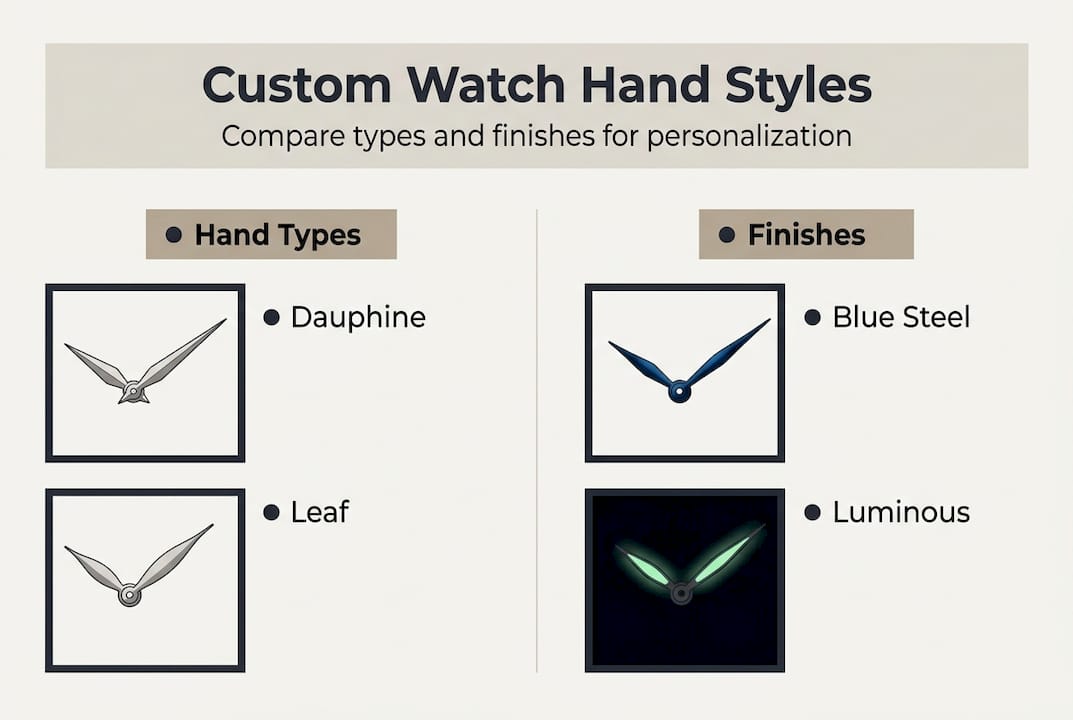
Major manufacturers offer hands for different materials, colors, and sizes, so always confirm specs with your supplier before ordering. Material options include brass, stainless steel, carbon fiber, and PVD-coated variants. Finishes range from polished and brushed to galvanic blue and matte black.
Pro Tip: When ordering from an overseas supplier, request a spec sheet with exact hole diameters. Don’t rely on movement name alone since some manufacturers produce multiple variants with slightly different pinion sizes.
You can also use the online custom builder to preview hand styles on different dial configurations before committing to a purchase.
Let’s move on to the actual process of swapping out or installing new watch hands.
Step-by-step: Replacing your watch hands safely
DIY replacement involves workspace prep, movement securing, removal and installation at 12:00, and alignment checking. Follow these steps in order.
- Prepare your workspace. Use a clean, static-free mat. Lay out all tools within reach. Work under bright, focused light.
- Remove the movement from the case. Use a case opener and movement holder to secure it. Never work on a loose movement.
- Protect the dial. Place a thin protective film or dial protector over the dial surface before touching the hands.
- Set hands to 12:00. Always remove and install hands at the 12:00 position. This keeps alignment consistent and makes reinstallation easier.
- Remove the second hand first. Use the lever-style hand remover gently. Lift straight up with even pressure.
- Remove the minute hand, then the hour hand. Work slowly. Never pry or twist.
- Install the hour hand first. Press it straight down onto the cannon pinion using the hand press. Check alignment visually.
- Install the minute hand. Align it precisely at 12:00 before pressing down.
- Install the second hand last. Press gently onto the center pinion.
- Check clearance. Slowly rotate the crown to advance the hands. Watch for any rubbing between layers.
Warning: Never force a hand onto a pinion. If it doesn’t seat with light pressure, the hole diameter is wrong. Forcing it will damage the pinion or bend the hand.
For watch setup basics including case reassembly and crown seating, review those steps before closing the case back.
Pro Tip: Use a piece of Rodico to pick up and position the second hand. It gives you control without touching the hand directly, which prevents oils from your skin from affecting the lume or finish.
After you’ve installed your new hands, let’s ensure they work as intended and learn what to do if things go wrong.
Testing, troubleshooting, and when to seek professional help
Installation isn’t complete until you’ve tested the movement fully. Here’s what to check:
- Rotate hands through a full 12-hour cycle. Listen and watch for any rubbing or sticking.
- Check hand clearance at every position. Hands can clear at 12:00 but catch at 3:00 or 9:00 due to slight dial warping.
- Test the date change. For mechanical movements, advance the time to just before midnight and confirm the date jumps cleanly at 12:00 AM.
- Check lume alignment. If your new hands have Super-Luminova, confirm the lume plots align with the dial markers in low light.
Common issues and quick fixes:
- Hand rubbing the dial: Re-seat the hand higher using the press. Check if the hand height spec matches your movement.
- Minute hand slipping: The hole diameter may be too large. Source a replacement with the correct spec.
- Second hand wobbling: The center pinion may be slightly bent. This requires professional attention.
When to go pro: If your watch is a vintage piece, a high-value luxury model, or still under warranty, professionals handle luxury refinishing and restoring rare hands using the best lume, finishes, and techniques that maintain value. DIY on a rare piece can reduce its resale value significantly.
For more DIY modding tips and guidance on when to attempt a mod yourself, the full guide covers movement selection and case compatibility in detail.
With all steps and safeguards covered, let’s review the overall pros, cons, and value of custom watch hands.
Custom hands: Value, risks, and inspiration
Custom hands add real value when done right. They can transform a basic timepiece into something that feels intentional and personal. For corporate gifting, they’re one of the few watch modifications that communicate brand identity at a glance.
Popular customization options:
- Galvanic blue: A deep, rich blue achieved through an electrochemical process. Highly popular for dress watches.
- Super-Luminova: Photoluminescent material applied to hand tips for visibility in low light. Available in green, blue, and white tones.
- PVD coating: Physical vapor deposition creates durable black, gold, or rose gold finishes.
- Bi-color hands: Polished top surface with brushed sides, adding depth and dimension.
- Carbon fiber inlays: Lightweight and visually striking, popular in sport and pilot-style watches.
Professionals are recommended for value preservation on luxury watches, while DIY suits modders working with affordable movements. If you’re working with a Seiko NH35 or Miyota-based build, the risk is low and the creative upside is high.
Manufacturers provide custom shapes, finishes, and luminous options for brand or prestige applications. This means you can order hands in your exact Pantone color, with your logo applied, or in a proprietary shape for a truly one-of-a-kind piece.
Stat callout: Hand sets for DIY customization typically range from $8 to $40, making it one of the most cost-effective ways to personalize a timepiece without a full rebuild.
For personal style inspiration, browse men’s luxury custom watches and women’s bespoke watches to see how different hand styles work across dial configurations.
Ready to customize your dream watch?
You now have the full picture: why custom hands matter, what tools you need, how to choose the right fit, and how to install them safely. The next step is putting that knowledge into action.
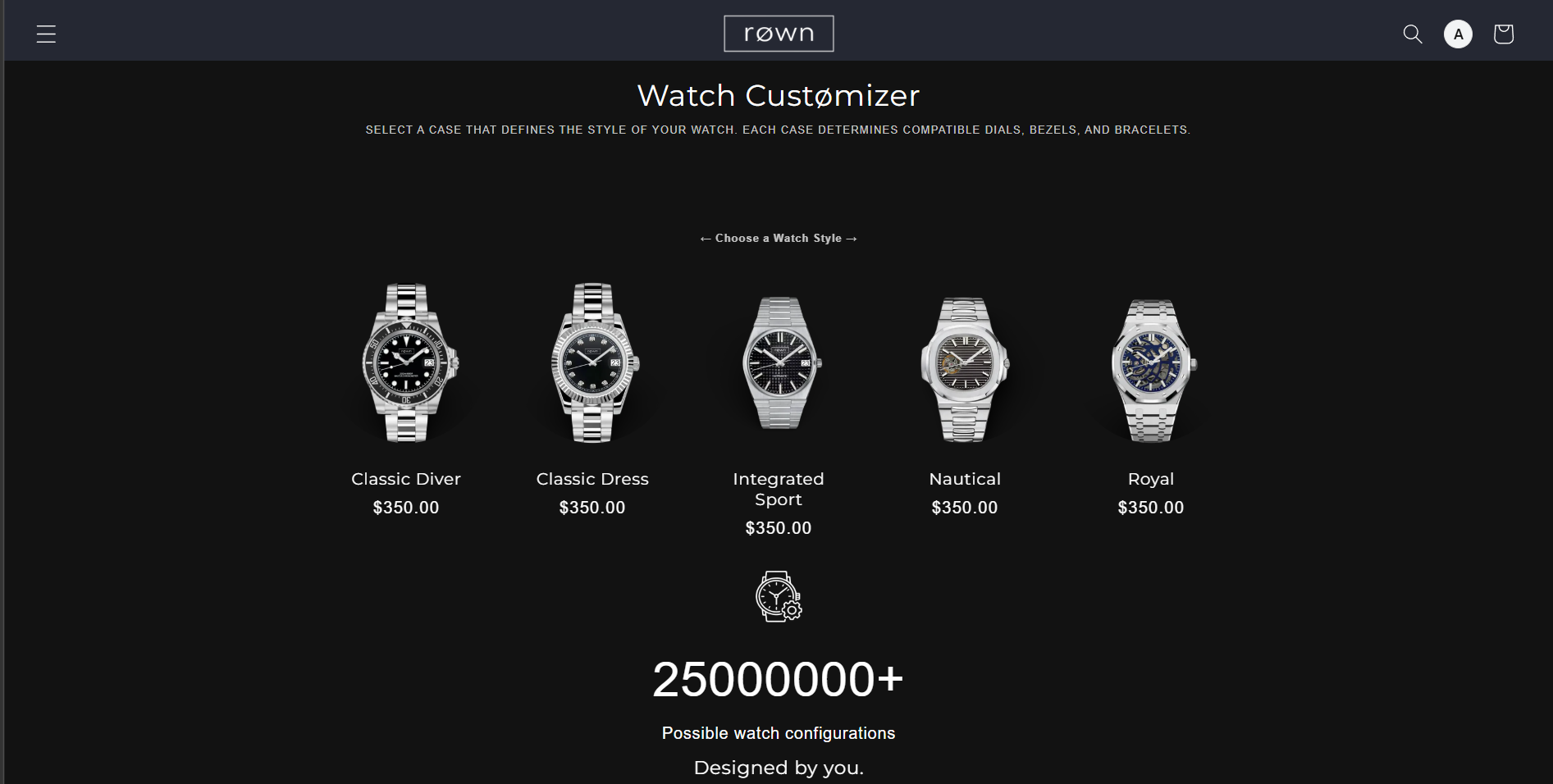
At Custom Built watches, we make personalization straightforward. Use our custom watch builder to select hand styles, dial configurations, and finishes in real time. Browse our curated collections of men’s luxury watches and women’s luxury watches to find a base that’s ready for your personal touch. Every piece is built with expert craftsmanship and backed by warranty coverage, so you get the creative freedom of customization without the risk of DIY on a high-value movement.
Frequently asked questions
Is it safe to replace watch hands yourself?
DIY suits affordable movements with the right tools, but it carries real risk on luxury or warranty-covered pieces. Use a professional watchmaker for anything high-value.
What happens if watch hands don’t fit perfectly?
Mismatched hands cause slippage or misalignment and can damage the cannon pinion over time. Always verify hole diameter and height specs before ordering.
Can I customize hands on vintage watches?
It’s best left to experts. DIY on a vintage piece can reduce its collector value or cause irreversible damage to rare components that professionals advise against attempting without proper training.
What finishes or colors are available for custom hands?
Custom manufacturers offer finishes including galvanic blue, Super-Luminova, PVD, Pantone-matched lacquer, and brass or carbon fiber constructions.
How much does it cost to customize watch hands?
DIY hand sets range from $8 to $40 per set. Professional custom work or rare material options cost significantly more depending on finish complexity and order volume.