

Open-heart watches are one of the most visually striking styles in mechanical watchmaking, yet they’re constantly mistaken for skeleton watches. The two are not the same, and that distinction matters when you’re building a personal collection or searching for a standout gift. Among men aged 25 to 34, interest in custom mechanical watches has grown sharply, with open-heart designs leading the charge for their balance of technical visibility and clean aesthetics. This guide breaks down exactly what open-heart watches are, how they work, and how to choose one that fits your style or the person you’re buying for.
Table of Contents
Key Takeaways
| Point | Details |
|---|---|
| Unique movement view | Open-heart watches showcase the movement’s balance wheel for a mesmerizing display. |
| Customization choices | You can personalize open-heart watches with custom dials, materials, and finishes. |
| Proper care matters | Simple cleaning and regular service keep your open-heart watch performing beautifully. |
| Not the same as skeleton | Open-heart watches reveal only a select part of the movement, unlike skeleton designs. |
What is an open-heart watch?
An open-heart watch is a mechanical timepiece with a deliberate cutout in the dial that exposes the balance wheel. That’s it. The rest of the dial remains intact, giving you a clean, readable face with one focused window into the movement beneath.
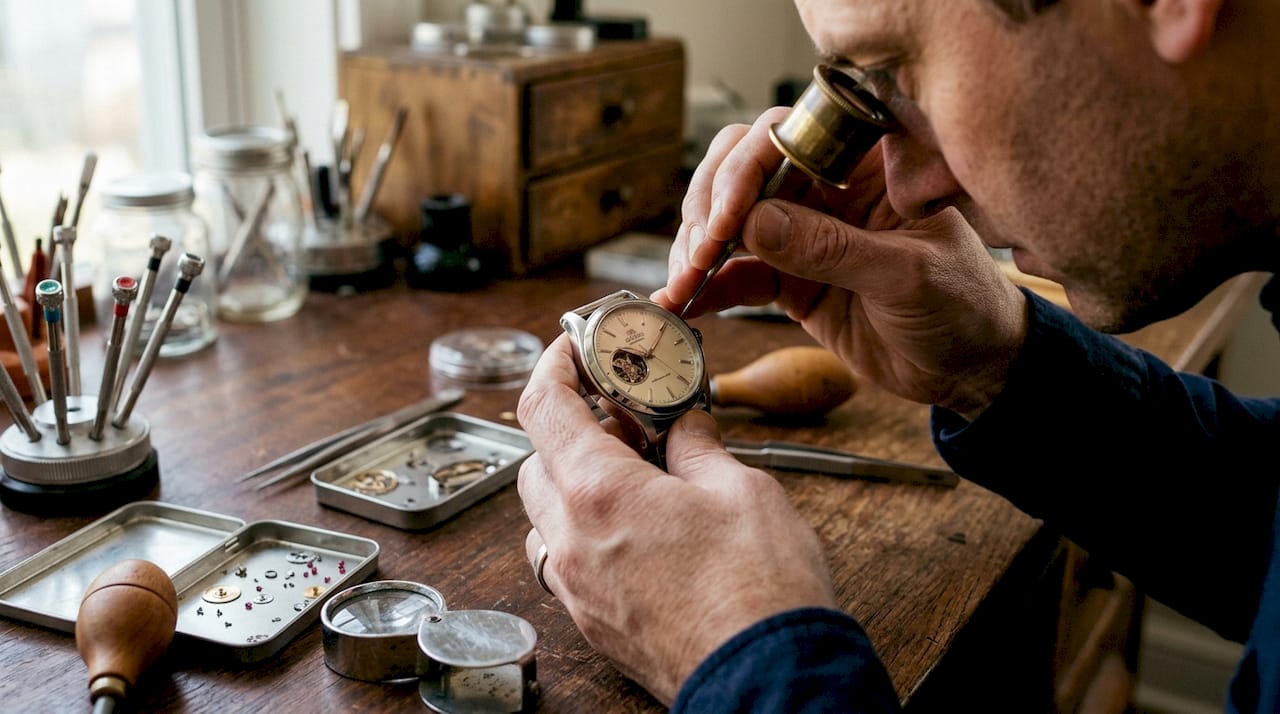
This is where most people get confused. A skeleton watch removes most of the dial and bridges to reveal the entire movement. An open-heart watch keeps things selective. You see one specific component, and that restraint is actually part of the appeal.
The balance wheel is the oscillating component that regulates timekeeping. It swings back and forth at a consistent rate, and watching it move gives you a real-time view of the watch doing its job. That visual is what draws collectors in.
Here’s what sets open-heart watches apart at a glance:
-
Focused exposure: Only the balance wheel is visible through the dial cutout
-
Readable dial: The rest of the dial functions normally, with hour markers and hands intact
-
Mechanical connection: You see the actual regulating organ of the watch in motion
-
Versatile aesthetic: Works in dress, sport, and casual watch designs
If you’re interested in building your own watch, understanding this distinction helps you make smarter decisions from the start. You can also explore our watch guides for deeper breakdowns on movement types and dial configurations.
Pro Tip: Open-heart watches are the ideal entry point if you want mechanical visibility without sacrificing dial legibility. They balance artistry and engineering in a way that works for everyday wear.
How open-heart movements work
With the basics defined, let’s look at the inner workings that make open-heart watches so fascinating.
Every mechanical watch runs on a series of interconnected components. The open-heart display puts the most important one front and center. Here’s how it all connects:
-
The mainspring stores energy when you wind the crown or when an automatic rotor spins with wrist movement.
-
The gear train transfers that energy through a series of wheels and pinions toward the escapement.
-
The escapement controls the release of energy in precise, measured increments.
-
The balance wheel receives those increments and oscillates back and forth at a fixed frequency, typically between 6 and 10 beats per second.
-
The dial cutout frames the balance wheel, letting you watch this regulation happen in real time.
The balance wheel is considered the heart of the watch because it sets the pace for everything else. Without it oscillating correctly, the watch gains or loses time.
“The precision required to finish and decorate a movement that will be partially visible is significantly higher than for a fully covered movement. Every component in the visible zone must be finished to a standard that holds up under direct observation.”
This is why custom watch building for open-heart designs requires careful attention to movement quality. What you see through that cutout reflects the overall standard of the entire piece.
Key features and customization options
Understanding the mechanics leads naturally to what’s possible when you want a watch that stands out.
Open-heart watches offer more customization potential than most people realize. The cutout itself can vary in shape, size, and placement. The movement beneath can be decorated or left in a more industrial finish. Here’s what you can typically work with:
-
Cutout shape: Round, teardrop, or asymmetric apertures each create a different visual effect
-
Movement decoration: Côtes de Genève striping, perlage finishing, and blued screws add visual depth to the exposed area
-
Balance wheel color: Some builds feature colored or skeletonized balance wheels for extra contrast
-
Case material: Stainless steel, rose gold plating, and titanium all change how the watch feels and wears over time
-
Crystal type: Sapphire crystals resist scratching and keep the dial view clean
-
Exhibition caseback: A see-through caseback lets you view the full movement from the rear
Pro Tip: If you’re choosing an open-heart watch as a gift, a decorated movement with a colored balance wheel makes the piece feel intentional and premium without requiring the recipient to know anything about horology.
When exploring men’s watches, pay attention to how the cutout interacts with the overall dial layout. A well-designed open-heart watch integrates the aperture into the dial composition rather than treating it as an afterthought. You can also use the how to build a custom watch tool to configure your own combination of materials and movement finishes.
Comparison: Open-heart vs skeleton vs exhibition watches
Having explored features, let’s compare open-heart watches with other popular mechanical watch styles to clarify your choices.
| Feature | Open-heart | Skeleton | Exhibition || |—|—|—|—| | Dial design | Partial cutout showing balance wheel | Fully or mostly removed dial | Standard dial, solid or printed | | Movement exposure | Single component visible | Full movement visible | Movement visible only from caseback | | Legibility | High | Low to moderate | High | | Aesthetic appeal | Focused, elegant | Bold, complex | Classic, understated | | Best for | Collectors and gift buyers | Watch enthusiasts | Everyday wear |
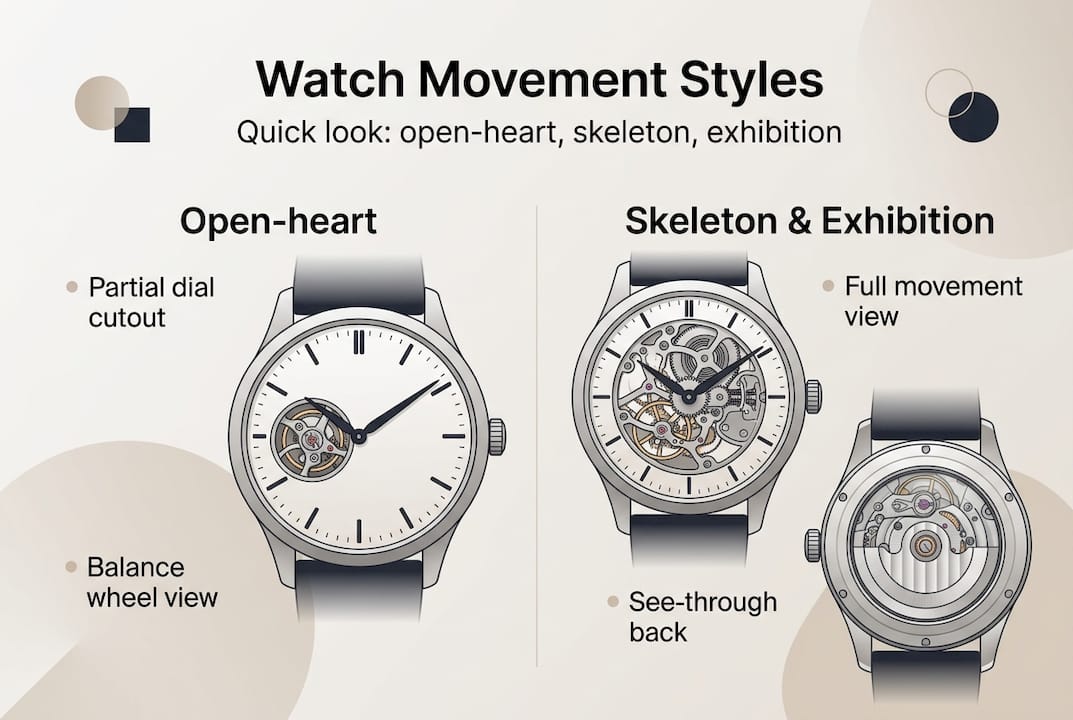
Open-heart designs have seen rising collector interest among younger buyers specifically because they offer mechanical visibility without the visual noise of a full skeleton. You get the conversation piece without sacrificing the ability to actually read the time.
For gifting, open-heart watches work well because they look impressive without requiring the recipient to understand every component on display. A skeleton watch can feel overwhelming to someone new to mechanical watches. An open-heart watch is immediately accessible.
If you want to see a specific example of how this translates into a finished piece, the Genesis Diver Rose Gold shows how open-heart design integrates into a sport watch format without losing its refined character.
How to choose the right open-heart watch
Once you know what sets each style apart, the next step is making your selection with confidence.
Follow this framework when narrowing down your options:
-
Define the purpose. Is this for your own collection or as a gift? Personal pieces can lean into niche preferences. Gifts benefit from broader appeal.
-
Set your budget range. Open-heart watches span from accessible entry-level pieces to high-end custom builds. Knowing your ceiling keeps the search focused.
-
Choose your movement type. Manual wind movements are thinner and more traditional. Automatic movements are more convenient for daily wear.
-
Select your case material. Stainless steel is durable and versatile. Rose gold plating adds warmth. Titanium is lightweight for active wear.
-
Evaluate the dial layout. The cutout should feel like part of the design, not a hole punched into an existing dial.
-
Consider finishing details. Movement decoration, hand style, and lume application all affect how the watch reads in different lighting.
Pro Tip: Match the movement decoration to the lifestyle of the wearer. A brushed, industrial finish suits someone who prefers understated style. A fully decorated movement with blued screws suits someone who appreciates visible craftsmanship.
Browsing best men’s open-heart watches with this checklist in hand makes the decision much more straightforward.
Caring for your open-heart watch
After selecting your perfect piece, keeping it in top condition is essential for lasting enjoyment.
Mechanical watches require consistent care to perform well and hold their value. Open-heart watches are no different, but the exposed balance wheel area does require a bit of extra attention.
-
Keep away from magnets. Strong magnetic fields disrupt the balance wheel’s oscillation and cause the watch to run fast or slow. Avoid placing your watch near speakers, laptop closures, or magnetic clasps.
-
Avoid harsh chemicals. Cleaning products, perfumes, and solvents can damage seals, degrade lubricants, and discolor metal surfaces.
-
Clean regularly. Wipe the case and crystal with a soft, lint-free cloth after wearing. This prevents buildup around the cutout area.
-
Service every 3 to 5 years. A watchmaker will clean, lubricate, and inspect the movement to keep it running accurately. This is the single most important maintenance step.
-
Store properly. Keep the watch in a dry, cool place away from direct sunlight. A watch box or pouch protects the crystal and case from scratches.
Following these steps protects both the performance and the appearance of your watch. For more detailed guidance, the open-heart watch care tips page covers everything from storage to servicing schedules.
Find your perfect open-heart watch
Now that you know what sets open-heart watches apart and how to care for them, you’re ready to find one that matches your style or marks a meaningful occasion. Whether you’re adding to your collection or searching for a gift that carries real weight, an open-heart watch delivers something most timepieces can’t: a visible connection to the mechanics that make it run.
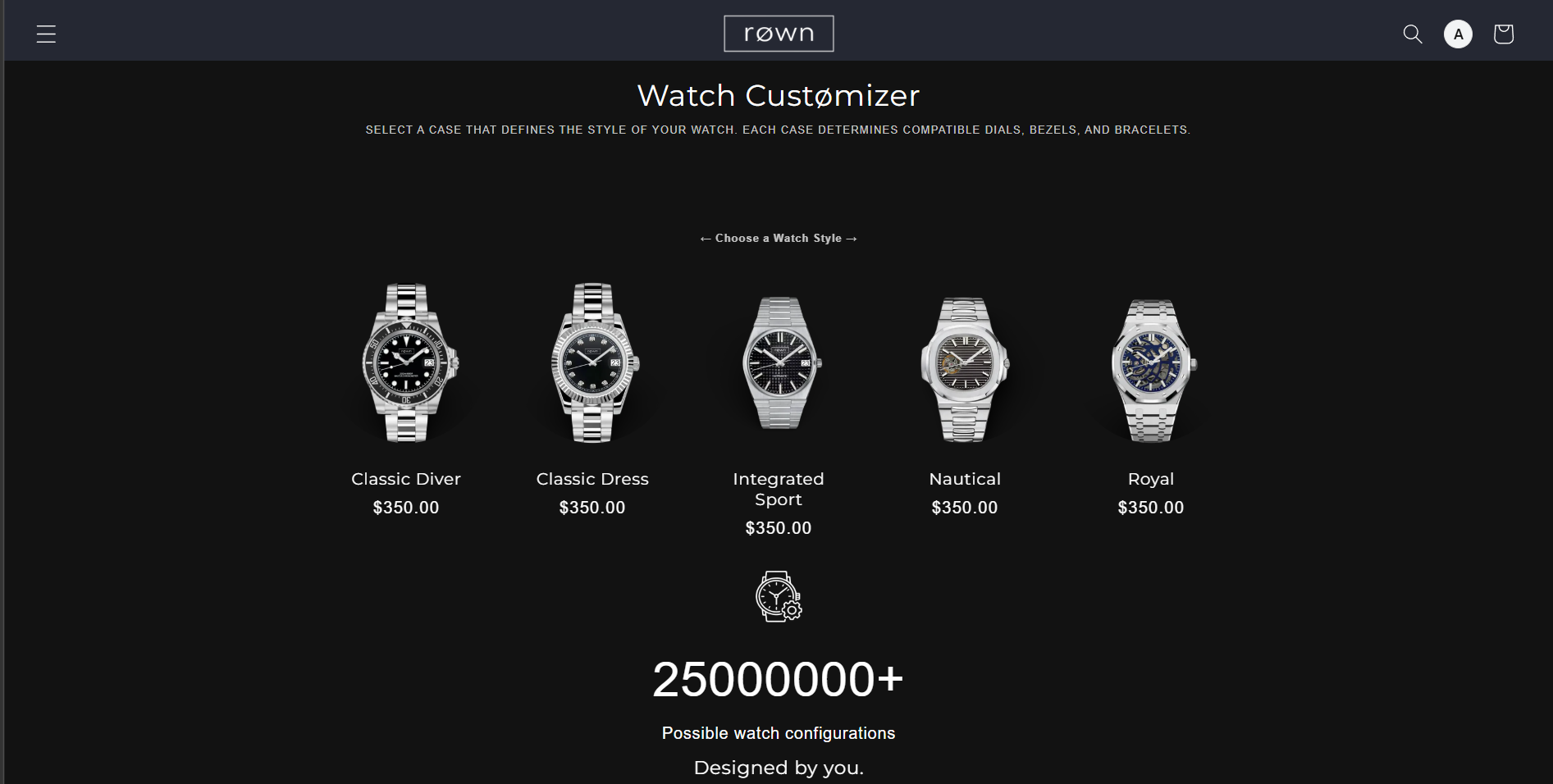
At , røwn we make it easy to go from interest to ownership. You can browse men’s open-heart watches to find ready-to-wear models, or use our custom watch builder to configure a piece from the ground up. Every detail, from case material to movement finish, is yours to choose. And once your watch arrives, our watch setup & care resources help you keep it performing at its best for years to come.
Frequently asked questions
What makes open-heart watches special compared to other mechanical watches?
Open-heart watches let you see the movement’s balance wheel through a dial cutout, giving you a direct view of the component that regulates timekeeping. Most mechanical watches hide this entirely behind a solid dial.
Are open-heart watches more difficult to maintain?
No. Open-heart watches follow the same maintenance schedule as other mechanical watches. Keep them clean, away from magnets, and service every few years to extend their life and accuracy.
Are open-heart and skeleton watches the same?
No. An open-heart watch exposes only the balance wheel through a small dial cutout. A skeleton watch removes most of the dial and bridges to reveal the full movement, which is a much more complex and visually busy result.
Can I build a custom open-heart watch?
Yes. Custom watch building is available through online tools that let you select your case, dial, movement, and finishing options step by step. It’s a practical way to get exactly what you want.
What should I look for when selecting an open-heart watch as a gift?
Focus on dial designs that integrate the cutout cleanly, personalization options like engraving or custom materials, and styles that reflect the recipient’s everyday aesthetic rather than your own preferences.