

Getting your NH34 or NH35 movement set incorrectly can throw off your custom automatic watch by minutes per day, shorten its lifespan, and undermine everything you invested in building or gifting it. These movements power some of the most sought-after custom timepieces available today, and how you set them directly affects precision, longevity, and the satisfaction of wearing something truly yours. Whether you’re fine-tuning a personal build or preparing a one-of-a-kind gift, this guide walks you through every step, from tools to troubleshooting, so you can handle it with confidence.
Table of Contents
- What are the NH34 and NH35 movements?
- Tools and preparation: What you need before setting
- Step-by-step instructions: Setting NH34 and NH35 movements
- Troubleshooting common issues and mistakes
- How to ensure accuracy and performance after setting
- Our take: What most guides get wrong about setting NH34 and NH35
- Discover custom watches and accessories
- Frequently asked questions
Key Takeaways
| Point | Details |
|---|---|
| Know your movement | Understanding NH34 versus NH35 helps you use the right approach for setting and maintenance. |
| Prep is key | Using the correct tools and a clean workspace prevents costly mistakes and damage. |
| Follow exact steps | Proper sequence and care ensure movement accuracy and avoid common issues. |
| Troubleshoot early | Most setting issues can be solved with quick fixes if spotted right away. |
| Enjoy your custom timepiece | Successful setting enhances the value and pride of your personalized watch. |
What are the NH34 and NH35 movements?
The NH34 and NH35 are automatic movements manufactured by Seiko’s movement division, TMI (Time Module Inc.). Both have earned a strong reputation among custom watch builders for their durability, serviceability, and compatibility with a wide range of aftermarket parts.
The NH35 is the more common of the two. It’s a three-hand movement featuring hours, minutes, and seconds, along with a date complication at the 3 o’clock position. It hacks (meaning the seconds hand stops when you pull the crown) and hand-winds, which makes setting it straightforward and precise.
The NH34 builds on that foundation by adding a GMT complication. That’s a fourth hand that tracks a second time zone on a 24-hour scale. It’s a more complex movement, and setting it requires one additional step to position the GMT hand correctly.
Both are popular choices for custom automatic watches because of their robust construction and reliable performance. If you’re interested in building your own watch, these movements are a natural starting point.
| Feature | NH34 | NH35 |
|---|---|---|
| Complications | GMT + Date | Date only |
| Number of hands | 4 (incl. GMT hand) | 3 |
| Crown positions | 3 | 3 |
| Power reserve | ~41 hours | ~41 hours |
| Beats per hour | 21,600 | 21,600 |
| Hacking seconds | Yes | Yes |
| Hand-wind | Yes | Yes |
Here’s why custom watchmakers favor both movements:
- Wide compatibility with aftermarket dials, cases, and hands
- Easy to service and regulate
- Reliable accuracy for the price point
- Strong community support and parts availability
- Great fit for open-heart watches explained and skeleton builds
Tools and preparation: What you need before setting
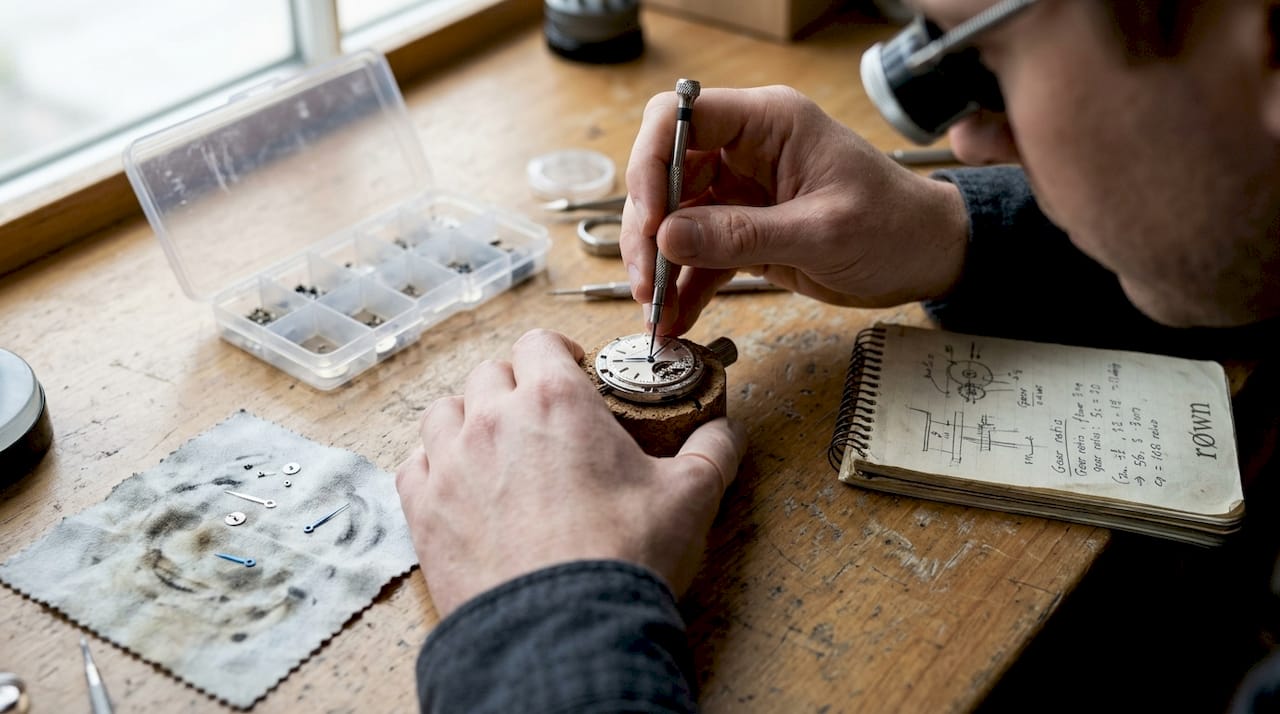
Before you touch the movement, getting your workspace and tools organized is essential. Rushing this step is how most setting mistakes happen. Using correct tools and an organized workspace is crucial for setting movements without causing damage.
Here’s what you’ll need:
- Case back opener: For removing the case back without scratching the case
- Movement holder: Keeps the movement stable while you work
- Rodico or peg wood: For handling and positioning hands without fingerprints
- Hand setting tool (or hand press): For seating hands cleanly on the movement
- Dust blower: Removes debris before closing the case
- Nitrile gloves: Prevents oils from your skin transferring to movement parts
- Loupe or magnifier: Essential for checking hand alignment closely
- Correct crown and stem: Make sure they match your case and movement
| Tool | Why you need it | Risk if omitted |
|---|---|---|
| Movement holder | Stabilizes movement during setting | Movement slips, hands misalign |
| Rodico/peg wood | Handles hands without direct contact | Fingerprints, scratches on dial |
| Hand press | Seats hands at correct depth | Hands catch on dial or crystal |
| Dust blower | Clears debris before sealing | Dust trapped under crystal |
| Loupe | Checks alignment precisely | Misaligned hands go unnoticed |
Preparation steps before you begin:
- Work on a clean, well-lit surface, ideally a watch mat
- Lay out all tools within easy reach
- Inspect the movement for any visible damage before proceeding
- Confirm your crown and stem are properly fitted
Pro Tip: The most commonly skipped tool is Rodico. It’s inexpensive and prevents fingerprint oils from reaching your dial or hands, which can cause long-term discoloration. Don’t skip it.
Step-by-step instructions: Setting NH34 and NH35 movements
With your tools ready and workspace set, here’s exactly how to set each movement with confidence. Precise hand alignment and following the correct sequence ensure movement accuracy and prevent mechanical stress.
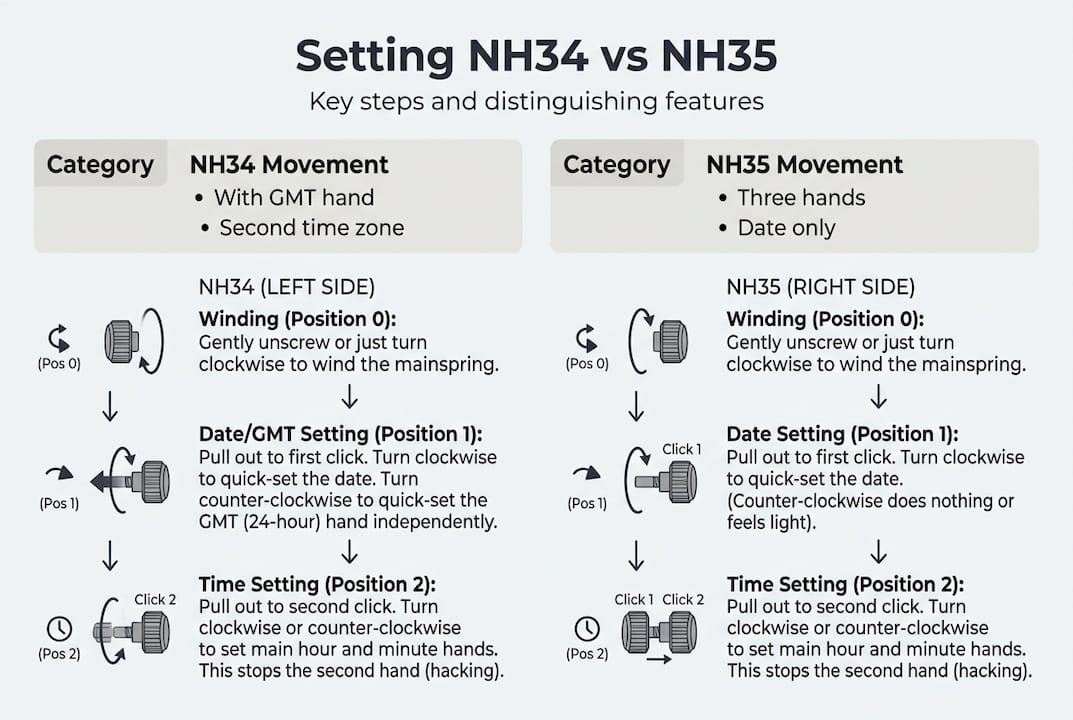
Setting the NH35:
- Pull the crown to position 1 (first click) to advance the date
- Set the date to the day before your target date
- Pull the crown to position 2 (second click) to hack the seconds
- Turn the crown clockwise to set hours and minutes
- At midnight, confirm the date changes correctly
- Push the crown back in firmly to the closed position
- Use a hand press to seat the seconds, minute, and hour hands in that order
Setting the NH34 (additional GMT step):
- Follow steps 1 through 4 above for the NH35
- With the crown at position 1, rotate to set the GMT hand to your reference time zone on the 24-hour scale
- Confirm the GMT hand moves independently of the hour hand
- Complete steps 5 through 7 as listed above
Caution: Never force the crown between positions or apply sideways pressure. Forcing hands onto the movement without a proper press can bend the cannon pinion (the post that holds the minute hand) and cause irreversible damage.
When customizing watch hands for a unique build, always confirm hand clearance above the dial before sealing the case.
Pro Tip: Before closing the case back, place the movement under a loupe and slowly advance the hands through a full rotation. Watch for any contact between hands or between a hand and the dial. Catching this now saves you from reopening the case later.
Troubleshooting common issues and mistakes
Even with care, setting issues can surface. Here’s how to solve them and keep your watch running perfectly.
Improper hand placement or incorrect crown operation are the most frequent causes of setting issues with NH movements. Knowing what to look for helps you fix problems fast.
Common issues and fixes:
- Seconds hand not stopping when crown is pulled: The stem may not be fully engaged. Push the crown in completely, then pull again firmly to position 2.
- Date not changing at midnight: You may have set the date during the danger zone (roughly 9 PM to 3 AM). Reset the time past 3 AM and re-advance to your target.
- Hands catching on each other or the dial: A hand is seated too low or too high. Remove and re-press using a hand press at the correct depth.
- GMT hand not tracking correctly (NH34): Confirm you’re adjusting the GMT hand at crown position 1, not position 2. These are separate functions.
- Watch losing or gaining significant time: The movement may need regulation. This is done by adjusting the regulator lever on the movement’s balance bridge.
Warning: If you feel resistance when turning the crown or setting the hands, stop immediately. Forcing any component risks stripping the setting mechanism or bending the cannon pinion. When in doubt, consult a watchmaker.
Know when to get professional help:
- The movement makes unusual sounds during setting
- The crown spins freely without engaging any position
- Hands won’t seat properly after two attempts
- The watch stops running after setting
For ongoing watch care basics, keeping a record of any issues helps a watchmaker diagnose problems faster.
How to ensure accuracy and performance after setting
The job’s not done after the last hand is set. Here’s how to safeguard your investment.
Periodic checks maintain precision and help you catch hidden issues before they become serious. A few simple habits go a long way.
Post-setting accuracy checklist:
- Compare your watch to a reliable time source (phone or GPS clock) immediately after setting
- Check again after 24 hours and note any gain or loss
- Confirm the date changes cleanly at midnight
- For NH34: verify the GMT hand tracks correctly over a 24-hour period
- Check that all hands move smoothly without hesitation
When to re-set, calibrate, or seek service:
- If the watch gains or loses more than 15 to 20 seconds per day, the movement may need regulation
- After any hard impact or drop, re-check accuracy immediately
- When traveling across multiple time zones, reset the NH34’s GMT hand to your new reference zone
- Service the movement every 3 to 5 years for cleaning, lubrication, and regulation
Tips for maximizing movement lifespan:
- Avoid exposing the watch to strong magnetic fields (speakers, laptop magnets)
- Store the watch in a watch box or roll when not wearing it
- If you’re not wearing it daily, wind it manually every few days to keep the lubricants distributed
- Explore in-depth watch guides to stay informed on care practices for your specific build
With consistent care, both the NH34 and NH35 are capable of running reliably for decades.
Our take: What most guides get wrong about setting NH34 and NH35
Most step-by-step guides treat movement setting like a checklist. Follow the steps, close the case, done. But that approach misses something important: feel.
The NH34 and NH35 have tolerances that reward patience. When you pull the crown to position 2 and feel that clean, positive click, you know the movement is engaged properly. When you press a hand onto the cannon pinion and it seats with just the right resistance, not too tight, not loose, that’s the difference between a watch that runs true and one that drifts.
Generic guides also skip the reality that custom watch build expertise takes repetition. Your first setting may not be perfect. That’s fine. What matters is slowing down, respecting the movement’s tolerances, and not forcing anything. The builders who get it right consistently are the ones who treat each step as deliberate, not just procedural. That mindset is what separates a well-built custom piece from one that ends up back on the bench.
Discover custom watches and accessories
Now that you know how to set your movement with precision, the next step is building something worth setting.
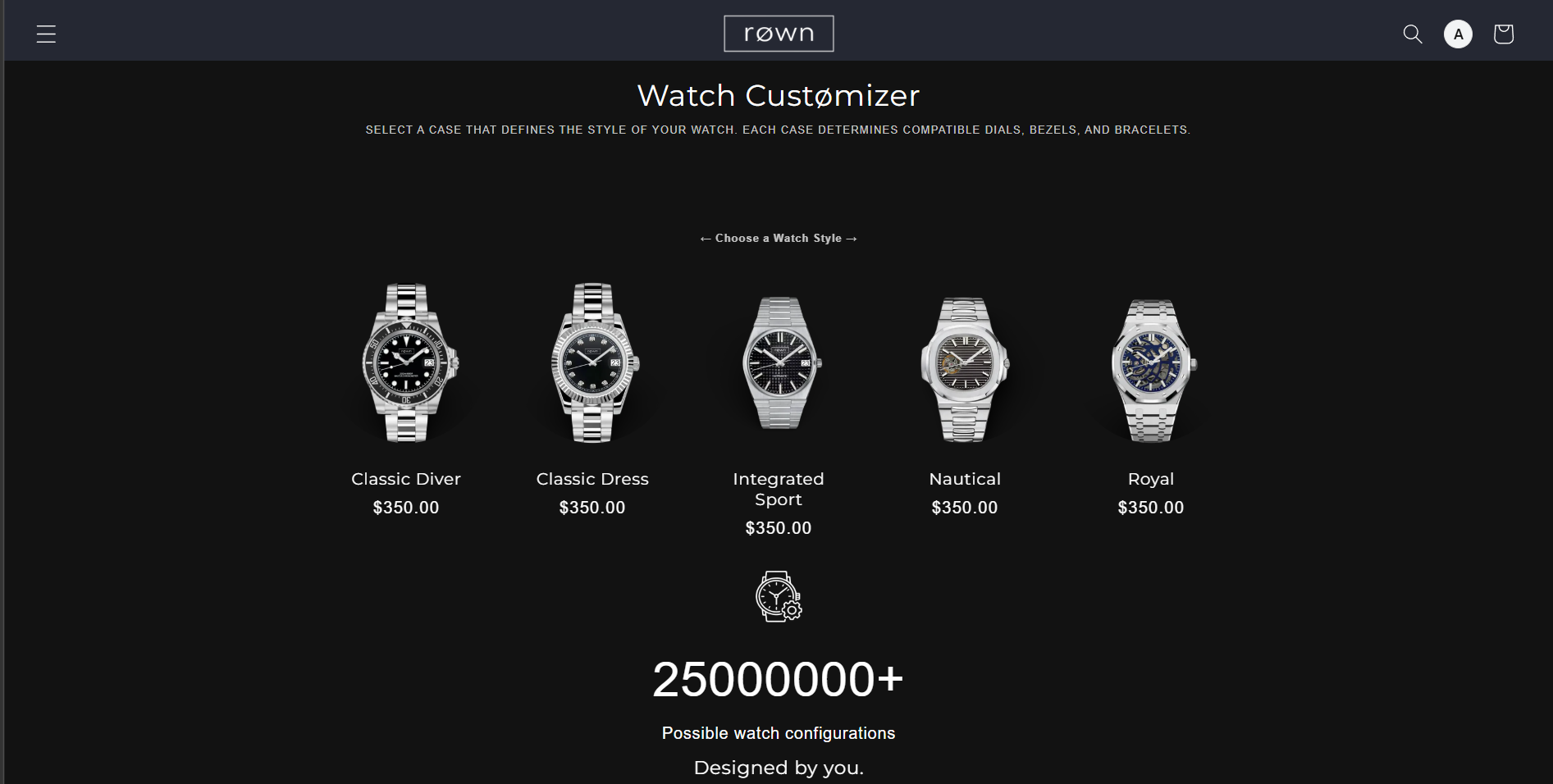
At røwn, you can explore men’s watches designed for customization from the ground up. Whether you’re drawn to the bold look of a custom diver collection or want to complete your build with the right bracelet styles, everything is in one place. Owning or gifting a custom-tuned timepiece is a different experience entirely. You know what’s inside, how it was set, and why every detail was chosen. That’s the kind of ownership that means something.
Frequently asked questions
What is the difference between NH34 and NH35 movements?
The NH34 offers GMT, meaning it tracks a second time zone with a dedicated fourth hand, while the NH35 is a classic three-hand movement with a standard date function.
Can I set NH34 or NH35 movements without professional tools?
It’s possible, but correct tools are crucial for setting movements without causing damage, especially when pressing hands or working close to the dial.
How do I fix misaligned hands after setting my movement?
Carefully remove the misaligned hand using a hand-lifting tool and re-press it at the correct depth and position, avoiding any direct finger contact with the hand or dial.
How often should I check my watch’s accuracy after setting?
Periodic checks maintain precision after setting, so aim to compare your watch to a reference time source every few weeks and immediately after any hard impact or time zone change.