

TL;DR:
- Matching watches to style archetypes ensures cohesive and intentional outfits across occasions.
- Proper pairing involves understanding watch components, occasion context, and personal style nuances.
- Personal experimentation and instinct remain more effective than AI or apps for achieving signature style.
Your watch is the one accessory that people notice before they hear you speak. It sits at the intersection of craftsmanship and personal expression, and when it works with your outfit, the whole look clicks. But when it doesn’t, even the most carefully assembled outfit can feel off. Many people own beautiful watches yet struggle to pair them confidently across different occasions and styles. This guide walks you through a clear, step-by-step process for matching your watch to your wardrobe, so every look you put together feels intentional, polished, and unmistakably yours.
Table of Contents
- Understanding personal style and watch basics
- Preparing your wardrobe: Choosing watches for different occasions
- Step-by-step: Matching your watch to your outfit
- Perfecting your look: Final checks and pro-level tips
- Why your best watch match can’t be automated
- Discover your next style-defining watch
- Frequently asked questions
Key Takeaways
| Point | Details |
|---|---|
| Know your style | Clarify your fashion personality to guide your watch choices for any look. |
| Match by occasion | Different watches suit different settings, so pair accordingly for the best effect. |
| Experiment with custom options | Customizable watches let you create a unique accessory that truly matches your wardrobe. |
| Tech is a tool, not a rule | Apps help, but your eye and flair are irreplaceable when it comes to style matching. |
Understanding personal style and watch basics
Before you can match a watch to an outfit, you need to know what kind of dresser you are. Your personal style archetype shapes every accessory decision you make, including your timepiece.
The four most common style archetypes are:
- Minimalist: Clean lines, neutral colors, understated silhouettes. You want a watch that disappears into the look rather than shouts.
- Sporty: Athletic cuts, technical fabrics, bold color blocking. Your watch needs to keep up with movement and energy.
- Classic: Tailored fits, timeless patterns, refined materials. A dress watch or a slim automatic suits you perfectly.
- Avant-garde: Experimental shapes, unexpected textures, statement pieces. Your watch is part of the art.
Once you know your archetype, you can start reading a watch the same way you read clothing. Every watch has a few core components worth understanding:
- Case: The housing that holds the movement. Size and material (steel, titanium, gold) signal formality.
- Dial: The face. Color, texture, and complications (extra functions like a date window or chronograph) all affect the visual weight.
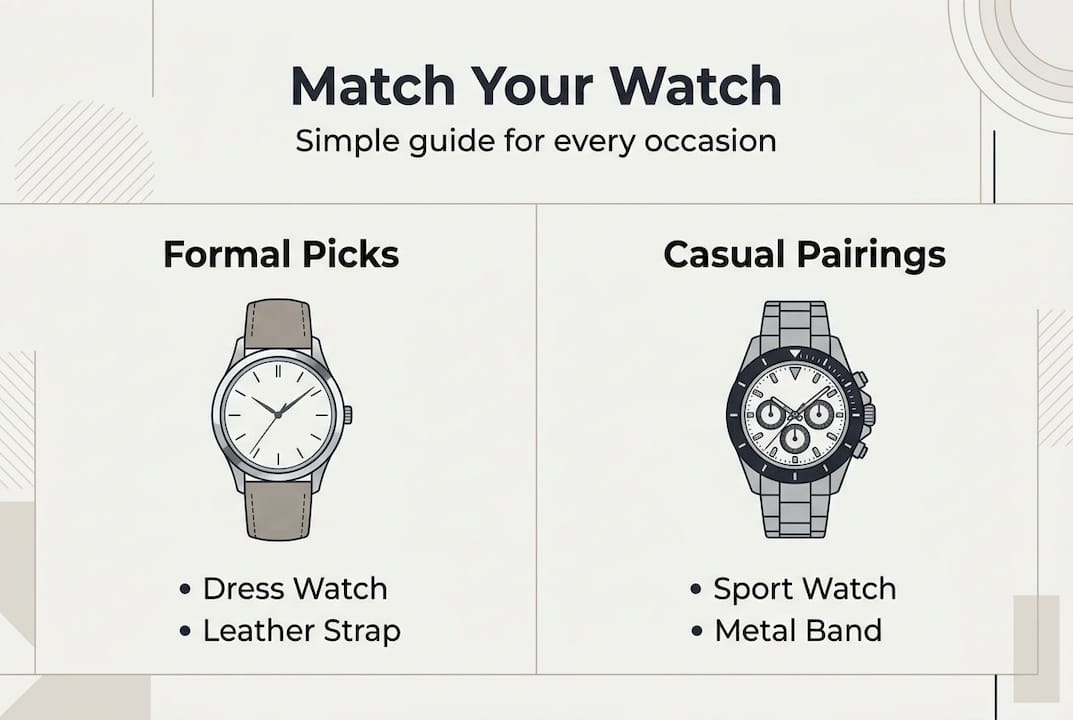
- Strap or bracelet: Leather reads formal. Rubber reads sporty. Metal bracelet sits in between.
- Movement: The engine inside. It doesn’t affect style directly, but it defines how a watch feels and wears over time.
These elements interact with your wardrobe constantly. A 44mm steel case with a rubber strap looks out of place with a slim-cut blazer. A 38mm gold-tone dress watch looks equally wrong with joggers. Wardrobe apps now use vision AI to match accessories based on outfit attributes and occasion, which shows how nuanced these pairings really are.
You can explore men’s watch styles or women’s watch trends to get a feel for what fits your archetype before committing.
| Style archetype | Recommended watch type | Ideal strap | Case size range |
|---|---|---|---|
| Minimalist | Thin dress watch | Leather or mesh | 36-40mm |
| Sporty | Diver or field watch | Rubber or NATO | 40-44mm |
| Classic | Automatic dress or pilot | Leather | 38-42mm |
| Avant-garde | Skeleton or open-heart | Metal or custom | 40-46mm |
Pro Tip: Most style mismatches happen when case size or strap material doesn’t align with the formality of the outfit. If you’re unsure, size down and go leather.
Preparing your wardrobe: Choosing watches for different occasions
Now that you know your style and the basics, let’s prepare your wardrobe for every occasion using smart watch pairings.
For most people aged 25 to 34, there are four recurring style scenarios that cover the majority of dressing decisions: the office, a social evening out, activewear, and a formal event. Each one calls for a different approach.
Here’s a step-by-step process for building three go-to outfits per scenario, centered on the watch:
- Pick the occasion. Start with one of your four scenarios. Be specific. “Office” could mean creative agency or corporate law firm, and those require very different watches.
- Choose your outfit anchor. This is the single piece that defines the look. A tailored blazer, a structured dress, a technical jacket. Everything else, including the watch, should support it.
- Select a watch that matches the anchor’s formality. Leather strap for structured pieces, rubber or NATO for casual or active looks, metal bracelet for evenings.
- Build two backup outfits in the same scenario. Rotate the same watch across all three to test its versatility. If it works across all three, it belongs in your rotation.
- Note what feels off. Occasion-based accessory suggestions from apps can now factor in event type and even weather context, but your own instincts are still the best filter.
| Occasion | Example outfit | Matched watch | Why it works |
|---|---|---|---|
| Office | Navy blazer, chinos | 40mm automatic, leather strap | Polished but not overdressed |
| Social evening | Dark jeans, fitted shirt | 42mm steel bracelet | Elevated without being formal |
| Activewear | Technical joggers, zip-up | Diver or sport watch, rubber | Functional and cohesive |
| Formal event | Suit or gown | Slim dress watch, leather | Refined and intentional |
For deeper inspiration on distinct luxury watch styles matched to real-life occasions, it helps to see curated examples before building your own rotation. You can also browse outfit pairings for men to visualize how specific watches sit within a full look.

Pro Tip: Keep a note in your phone of outfits where your watch felt wrong. After a few weeks, patterns emerge. You’ll quickly see which gaps in your watch collection are worth filling.
Step-by-step: Matching your watch to your outfit
With occasion-specific pairing in mind, now master the precision of actually matching your watch to today’s outfit.
This is where the real decisions happen. Follow these steps each time you get dressed:
- Identify the outfit’s centerpiece. Is it a bold-colored jacket? A textured knit? A sleek monochrome suit? The watch should support this piece, not compete with it.
- Match metals to hardware. If your belt buckle and shoes are silver-tone, go with a steel or white-gold case. Gold-tone watches work best when other warm metals are present in the outfit.
- Coordinate dial color with clothing tones. A navy or black dial reads neutral. A white or cream dial adds lightness. Colored dials (green, blue, burgundy) work as accent pieces, similar to a pocket square.
- Choose strap texture intentionally. Smooth leather suits formal looks. Textured or distressed leather works with casual outfits. Rubber and nylon straps belong with sportswear or relaxed weekend looks.
- Customize for uniqueness. Swapping a strap, changing the dial, or selecting a custom bezel can completely transform a watch’s personality without buying something new.
Common pitfalls to avoid:
- Clashing metals: Gold watch with silver cufflinks breaks visual harmony.
- Oversized case on slim outfits: A 46mm watch on a slim-cut shirt looks unbalanced.
- Too much going on: A skeleton dial with an open-heart design pairs best with simple, clean outfits. See how open-heart watch styling works in practice.
- Ignoring strap width: A wide strap on a narrow wrist reads clunky.
Customization tips for maximizing uniqueness:
- Swap straps seasonally. Lighter colors in spring and summer, darker tones in fall and winter.
- Choose a dial color that echoes one element in your outfit, not the dominant color.
- Explore customizing watch hands for a subtle but powerful way to personalize your timepiece.
- Browse more watch style guides to keep building your eye for detail.
“While AI can suggest, personal experimentation still creates the best style matches.”
Style matching AI limitations are real. No industry benchmarks exist for algorithmic watch style matching, which means expertise and experimentation still matter most.
Perfecting your look: Final checks and pro-level tips
After matching your watch, use these steps to ensure your accessory completes rather than competes with your look.
Before you leave the house, run through this quick mirror checklist:
- Fit: Does the watch sit comfortably on your wrist without sliding? Is the bracelet or strap adjusted properly?
- Color balance: Does the watch dial or strap echo at least one color or tone already present in the outfit?
- Formality alignment: Is the watch’s overall weight (sporty, casual, formal) consistent with the occasion you’re dressing for?
- Proportion: Does the case size feel balanced relative to your wrist size and the visual weight of your outfit?
Once you’ve done the self-check, get a second opinion. Here’s how:
- Take a selfie or outfit photo. Looking at yourself through a lens is different from looking in a mirror. You’ll notice things you missed.
- Ask someone whose style you respect. A quick “does this watch work?” from a trusted friend is worth more than any algorithm.
- Use fashion apps as a starting point, not a final answer. Style apps lag in personalized feedback; visual self-checks and peer input remain the most reliable tools.
- Revisit your outfit notes. If a similar combination felt off before, it probably will again.
Here’s something worth knowing: the luxury movement inside your watch affects how it feels on the wrist and how confidently you wear it. Confidence is visible. When you know your watch is well-made and intentionally chosen, it shows in how you carry yourself.
If you’re ready to go further, building a custom watch gives you complete control over every element, from dial to strap to case finish, so your watch is never a compromise.
Statistic callout: 70% of users still rely on peer validation over pure AI for final style approval. Your instincts, refined by real feedback, are your best styling tool.
Why your best watch match can’t be automated
Here’s the honest take after working through all the technical steps: no app is going to nail your personal style for you. Current wardrobe apps use AI to suggest matches, but they lack bespoke watch-specific intelligence. They don’t know how a particular dial color catches light in the evening. They don’t know that you always feel more confident in a steel bracelet than a leather strap. They can’t account for the emotional weight of a watch you’ve worn for years.
True style mastery with watches comes from trying combinations, noting what works, and building an instinct over time. You’ll make mistakes. You’ll wear a watch that clashes and feel it immediately. That discomfort is useful. It sharpens your eye faster than any tutorial.
The goal isn’t perfection. It’s developing a signature approach that feels like you. Explore developing a signature style to see how that looks in practice with real watch choices.
“The best style is the one that’s unmistakably yours.”
Trust that. Experiment freely. The right match will feel obvious once you’ve done the work to get there.
Discover your next style-defining watch
You now have a clear framework for matching any watch to any outfit, from daily office looks to formal occasions. The next step is finding a watch worth building around.
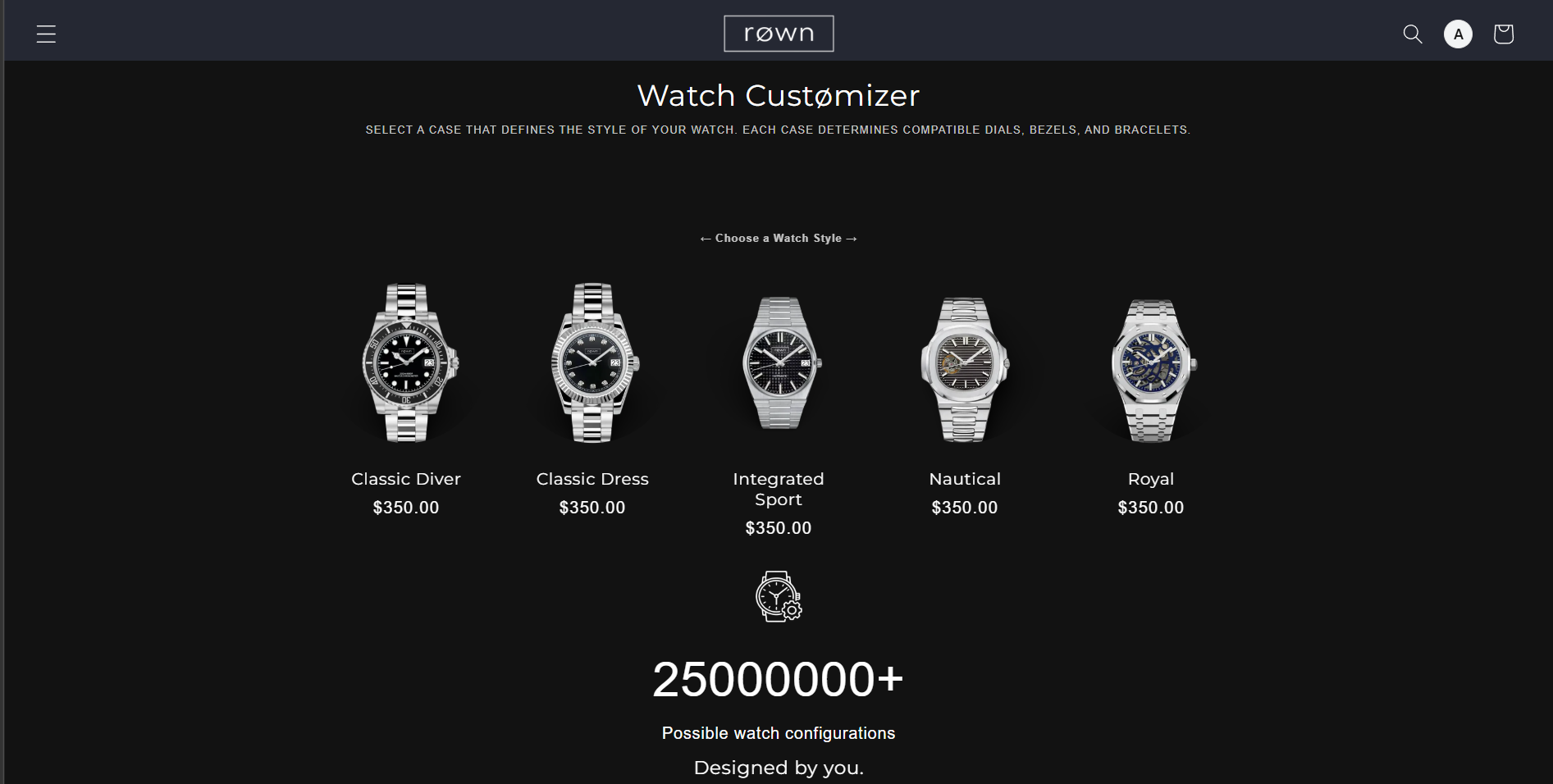
At Røwn Jewelry, you can shop men’s watches or shop women’s watches across a curated range of styles built for people who take their look seriously. If you want something truly yours, discover the Custom Diver and configure your dial, case, bezel, and strap from scratch. Every detail is your choice. Free shipping, premium materials, and a timepiece that fits your style exactly as you imagined it.
Frequently asked questions
What is style matching when it comes to watches?
Style matching pairs your watch to your outfit, mood, and occasion so both look intentional and complementary. Wardrobe AI now links watches to look and context as full fashion accessories, not just timekeeping tools.
Can apps or AI help me match watches to my outfits?
Apps can offer a useful starting point, but manual input and personal taste are still essential for a truly great match. No app benchmarks exist for automatic watch style matching, so experimentation remains the most reliable method.
What should I consider when picking a watch for a special event?
Focus on formality level, color coordination with your attire, and the visual scale of the watch relative to your overall outfit. Color, pattern, and material all factor into how well a watch reads against a specific clothing type and occasion.
Is customizing a watch worth it for unique style?
Absolutely. Customizing lets you choose colors, materials, and details for a piece that’s built around your specific look rather than adapted to it. Customization options are increasingly recognized as the most direct path to individual craftsmanship and style expression.
Recommended
- How to Build Your Own Watch | The #1 Ranked Custom Watch Builder by – røwn
- Explore Women’s Watches – røwn
- How to customize watch hands for a unique luxury look – røwn
- Explore Men’s Watches – røwn
- Styling tips for designer clothes: 5 expert essentials 2026 – MaraFormigone
- Top fashion trends in 2026 for bold self-expression – ELEDOasis