

TL;DR:
- Mechanical watches are intricate, hand-engineered objects built from hundreds of tiny components.
- They operate on stored mechanical energy, with manual and automatic winding options.
- Luxury complications like tourbillons symbolize artistry and craftsmanship beyond mere accuracy.
Mechanical watches are often dismissed as relics in a world of smartwatches and quartz precision. That view misses the point entirely. A mechanical watch is not just a timekeeping device. It is a carefully engineered object built from hundreds of tiny components working in harmony, and today’s options for customization and luxury complications make them more relevant than ever. Whether you are drawn to the visible movement of an open-heart dial or the prestige of a tourbillon, understanding how these watches work helps you choose and build one that genuinely reflects who you are.
Table of Contents
- What defines a mechanical watch?
- Inside the movement: How mechanical watches tick
- Complications and regulation: Luxury meets accuracy
- Design and customization: Making your watch uniquely yours
- Fresh perspective: Why mechanical mastery matters in a digital age
- Explore luxury mechanical watches and custom options
- Frequently asked questions
Key Takeaways
| Point | Details |
|---|---|
| Mechanical movement basics | Mechanical watches operate using gears, springs, and escapements, offering a blend of tradition and technology. |
| Luxury complications matter | Features like chronographs and tourbillons add both prestige and visual intrigue to high-end timepieces. |
| Regulation enhances accuracy | Choosing the right balance and regulator impacts performance and durability, especially for active wearers. |
| Design and customization options | Modern mechanical watches can be uniquely tailored to match your style, thanks to advancements in customization. |
What defines a mechanical watch?
A mechanical watch runs entirely on stored mechanical energy. There are no batteries, no circuits, and no digital signals. Instead, a coiled spring called the mainspring stores energy, which is released through a series of gears and a component called the escapement. The escapement controls the release of energy in precise, rhythmic intervals, which is what creates that satisfying tick.
There are two main types of mechanical watches:
- Manual (hand-wound): You wind the crown by hand, typically daily, to keep the mainspring tensioned.
- Automatic (self-winding): A rotor spins with your wrist’s natural movement and winds the mainspring automatically.
Both types share the same core mechanics. The difference is simply how energy gets into the system.
What separates mechanical watches from quartz or smartwatches is not just function. It is the philosophy behind them. Collectors who explore luxury watch styles understand that a mechanical movement represents human ingenuity at a miniature scale.
| Feature | Mechanical | Quartz | Smartwatch |
|---|---|---|---|
| Power source | Mainspring | Battery | Rechargeable battery |
| Accuracy | ±5 to 15 sec/day | ±15 sec/month | Syncs to atomic time |
| Prestige | Very high | Moderate | Low to moderate |
| Customizability | Very high | Limited | Moderate |
| Longevity | Decades with care | 10 to 20 years | 3 to 5 years |
Luxury complications add another layer of appeal. A chronograph is essentially a built-in stopwatch, useful and visually dynamic. A tourbillon is a rotating cage that holds the escapement and balance wheel, designed to counteract the effects of gravity on timekeeping accuracy. Tourbillons can achieve accuracy within roughly ±3 seconds per day, though their real draw is their hypnotic motion and the extraordinary skill required to build them.
If you want to explore men’s watches with visible movement architecture, the mechanical category gives you options that quartz simply cannot match.
Inside the movement: How mechanical watches tick
Every mechanical watch follows the same energy path. You wind the crown, tension builds in the mainspring, and that energy flows outward through the gear train to the escapement, which meters it out in controlled beats. The balance wheel oscillates back and forth, and each swing allows the escape wheel to advance by one tooth. That is what moves the hands.
Here is the sequence broken down:
- Winding: Crown rotation (or rotor movement) tensions the mainspring inside the barrel.
- Energy storage: The mainspring holds potential energy in its coiled form.
- Gear train: Energy transfers from the barrel through a series of gears, each stepping up speed and reducing torque.
- Escapement: The pallet fork and escape wheel work together to release energy in measured pulses.
- Balance wheel: Oscillates at a fixed frequency (commonly 28,800 beats per hour) to regulate time.
- Display: The gear train drives the hands on the dial.
“Precision comes from the harmonious dance of gears, springs, and escapement.”
One concept that matters a lot for performance is isochronism, which means the balance wheel oscillates at a consistent rate regardless of how much tension remains in the mainspring. A fully wound spring delivers more torque than a nearly depleted one, and that variation can affect accuracy. Balancing mainspring dimensions inside the barrel is a critical engineering challenge that directly impacts rate stability and power reserve.
| Component | Function | Impact on performance |
|---|---|---|
| Mainspring | Stores energy | Determines power reserve |
| Gear train | Transfers energy | Controls hand speed |
| Escapement | Regulates energy release | Core of accuracy |
| Balance wheel | Oscillates to measure time | Sets beat frequency |
| Jewels | Reduce friction | Extend movement lifespan |
Pro Tip: Thicker mainsprings deliver higher torque but reduce your power reserve. When customizing a movement, find the right balance between reserve duration and consistent energy output.
For a deeper look at how different calibers compare in terms of architecture and performance, the guide on watch movement types breaks it down clearly.
Complications and regulation: Luxury meets accuracy
Complications are any watch functions beyond basic timekeeping. They add technical depth, visual interest, and in many cases, significant value. For luxury buyers, they are often the deciding factor.
The most coveted complications in luxury mechanical watches include:
- Chronograph: Adds a stopwatch function with pushers on the case side. Practical and visually bold.
- Tourbillon: A rotating cage that counteracts gravity’s effect on the escapement. Single, double, and triple-axis versions exist, each more complex than the last.
- Perpetual calendar: Automatically adjusts for month lengths and leap years.
- Minute repeater: Chimes the time on demand using tiny hammers and gongs.
- GMT complication: Displays a second time zone, ideal for frequent travelers.
- Moon phase: Tracks the lunar cycle through a rotating disk on the dial.
Tourbillons are worth understanding honestly. They were invented in 1801 to improve pocket watch accuracy when watches spent long periods in one position. On a wristwatch, which moves constantly, the practical benefit is debated. Most experts agree they are more a symbol of prestige and artisanal skill than a functional necessity. That said, watching one rotate is genuinely captivating, and the craftsmanship required to build one is extraordinary.
Regulation is a separate but equally important topic. It refers to how the movement’s rate (how fast or slow it runs) is adjusted. Two main systems exist:
- Curb-pin regulation: A small pin moves along the balance spring to fine-tune the rate. Common and effective, but can be sensitive to shock.
- Free-sprung balance: The balance spring is not constrained by a curb pin. Used by brands like Rolex and Patek Philippe. More resistant to shock and more stable over time.
Rate regulation directly affects how consistently your watch performs across different activities and environments.
Pro Tip: If you lead an active lifestyle or want long-term accuracy without frequent servicing, prioritize movements with free-sprung balances. They handle shocks better and hold their rate more reliably.
For those drawn to visible movement architecture, open-heart craftsmanship gives you a direct view of these components in action. And if you are building your own piece, the NH35 and NH34 setup guide walks you through the practical steps.

Design and customization: Making your watch uniquely yours
Knowing how a movement works is only half the picture. The other half is how your watch looks and feels on your wrist. This is where customization becomes genuinely exciting.
The key design elements you can personalize include:
- Case: Shape, size, material (stainless steel, titanium, gold PVD), and finish (brushed vs polished).
- Dial: Color, texture, indices, applied markers, and whether the movement is visible through an open-heart or skeleton design.
- Hands: Shape (sword, baton, cathedral, snowflake), finish, and lume application.
- Bezel: Fixed, rotating, ceramic, or gem-set options.
- Bracelet or strap: Metal bracelet, leather, rubber, or NATO, each changing how the watch wears and feels.
- Movement choice: The caliber you select determines which complications are possible and how the watch performs.
Your movement choice ties directly into your design goals. If you want an open-heart dial, you need a movement with a visible balance wheel in the right position. If you want a chronograph, the movement must support that complication. Design and mechanics are not separate decisions. They inform each other.
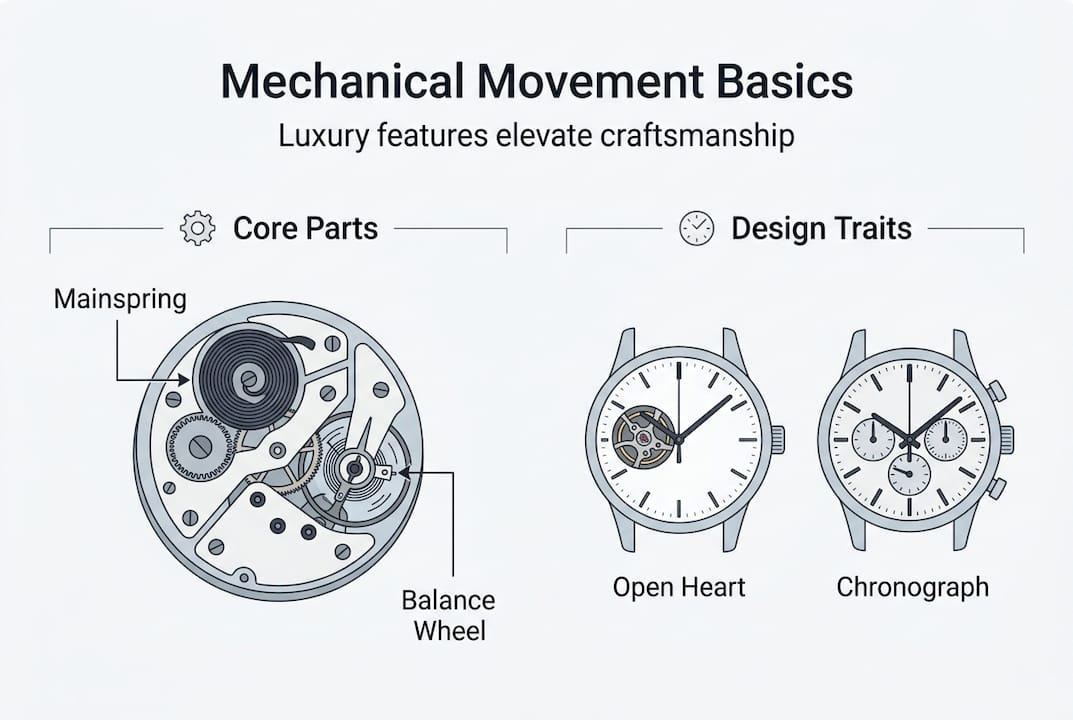
Technical advancements in mechanical watches have made it easier than ever to combine high performance with personal expression. You no longer have to choose between a watch that works beautifully and one that looks exactly how you want it to.
For practical guidance on building a custom watch from scratch, the process is more accessible than most people expect. And details like customizing watch hands can make a significant difference in the final look without requiring advanced technical knowledge.
Fresh perspective: Why mechanical mastery matters in a digital age
Here is something worth considering. In a world where your phone tells time more accurately than any mechanical watch ever will, people are buying more mechanical watches, not fewer. That is not nostalgia. It is a deliberate choice.
A mechanical watch signals something about your values. It says you appreciate things that are built to last, that require skill to create, and that carry meaning beyond their function. Wearing one is a statement about how you relate to time itself, not just how you measure it.
The tourbillon debate is a perfect example of this shift. Critics point out that tourbillons offer minimal practical benefit on a wristwatch. They are right. But that argument misses why people buy them. Luxury buyers are not optimizing for accuracy. They are investing in artistry, in the visible proof of human skill operating at an almost impossible scale.
Mechanical watches also connect you to a tradition of innovation that predates the digital age by centuries. Choosing a unique luxury style in a mechanical timepiece is not about rejecting modern technology. It is about choosing something that technology alone cannot replicate.
Explore luxury mechanical watches and custom options
If this guide has sparked your interest in owning or building a mechanical watch, you are in the right place. Røwn offers a curated selection of men’s luxury watches built around quality movements and refined design.
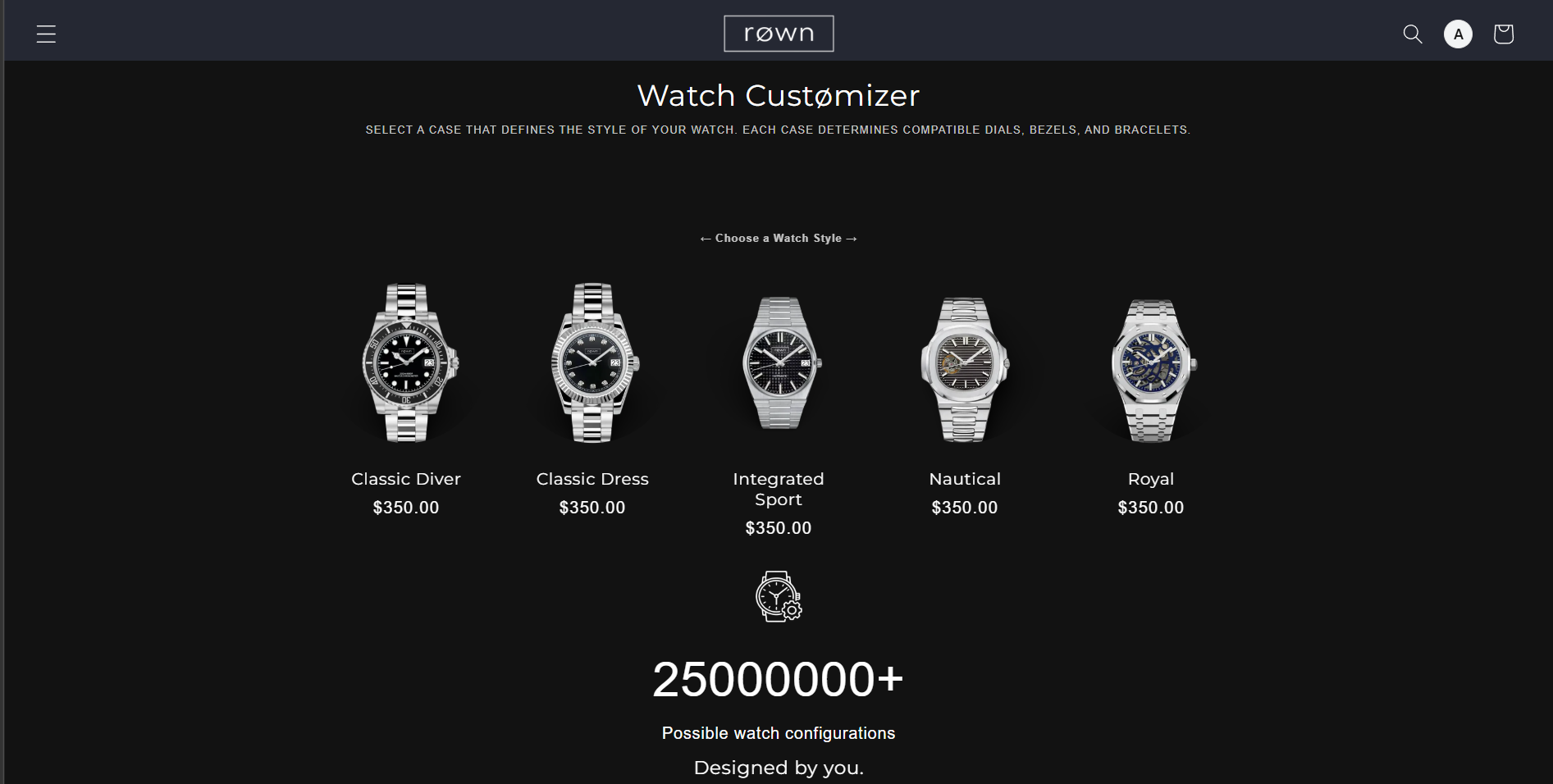
Want to design something entirely your own? The custom watch builder lets you select your case, dial, hands, movement, and more, all in one place. Once your watch arrives, the watch setup and care resources help you get it running perfectly and keep it that way. Your ideal mechanical watch is closer than you think.
Frequently asked questions
How does a mechanical watch differ from an automatic watch?
An automatic watch is a type of mechanical watch that winds itself using your wrist’s movement, while a manual mechanical watch requires hand-winding. Both use the same spring and gear-based mechanics at their core.
Are luxury complications like tourbillons worth the price?
Tourbillons are prestige symbols more than practical necessities in modern wristwatches, with debated accuracy benefits but undeniable visual and artisanal appeal. If craftsmanship and exclusivity matter to you, they are worth every dollar.
What does regulation mean in mechanical watches?
Regulation is the fine-tuning process that controls a watch’s rate accuracy. Curb-pin and free-sprung balance systems are the two main approaches, each with different trade-offs in stability and shock resistance.
Can I customize my mechanical watch?
Yes. Custom watch builders allow you to personalize the movement, case, dial, hands, and strap to create a timepiece that is entirely your own.
Recommended
- Watch movement types: precision, customization & choice – røwn
- Luxury watches crafted for your distinct style in 2026 – røwn
- How to Build Your Own Watch | The #1 Ranked Custom Watch Builder by – røwn
- How to customize watch hands for a unique luxury look – røwn
- Role of Craftsmanship in Luxury Bags: Why Quality Matters - BVPRIVE