

TL;DR:
- True limited edition watches have publicly announced production totals and authentic documentation.
- Brands release limited editions for milestones, collaborations, market testing, and creating urgency.
- Verifying genuine editions requires official certificates, serial numbers, brand records, and reputable sellers.
The words “limited edition” appear on more watch releases every year, yet few buyers stop to question what they actually mean. Some editions genuinely number fewer than 100 pieces worldwide. Others claim “limited” status while shipping tens of thousands of units globally. That gap between perception and reality can cost you real money, and real satisfaction. Whether you’re building a personal collection or choosing a meaningful luxury gift, knowing the difference between true exclusivity and polished marketing is one of the most useful skills you can develop as a collector.
Table of Contents
- What defines a limited edition watch?
- Why do brands release limited editions?
- How can you verify a watch’s limited status?
- Understanding value: Scarcity, demand, and market realities
- A collector’s perspective: How to judge true exclusivity
- Explore distinctive limited edition and custom watches
- Frequently asked questions
Key Takeaways
| Point | Details |
|---|---|
| Clear definitions matter | Real limited editions are announced in set quantities—always verify authenticity. |
| Motives impact value | Brand intent, like collaborations or commemorations, can shape true collector worth. |
| Verification is essential | Check serial numbers, certificates, and modern technology to avoid disappointment. |
| Market realities | Not all limited editions appreciate—demand and brand reputation are key factors. |
What defines a limited edition watch?
With that initial confusion set aside, let’s clarify what actually qualifies as a limited edition watch.
Limited edition watches are timepieces produced in a finite, publicly announced quantity by the manufacturer. That definition sounds simple, but the real world is messier. The spectrum ranges from ultra-rare high horology pieces numbered in the single digits to large-brand releases capped at 5,000 or even 10,000 units. All of them can legally carry the “limited edition” label.
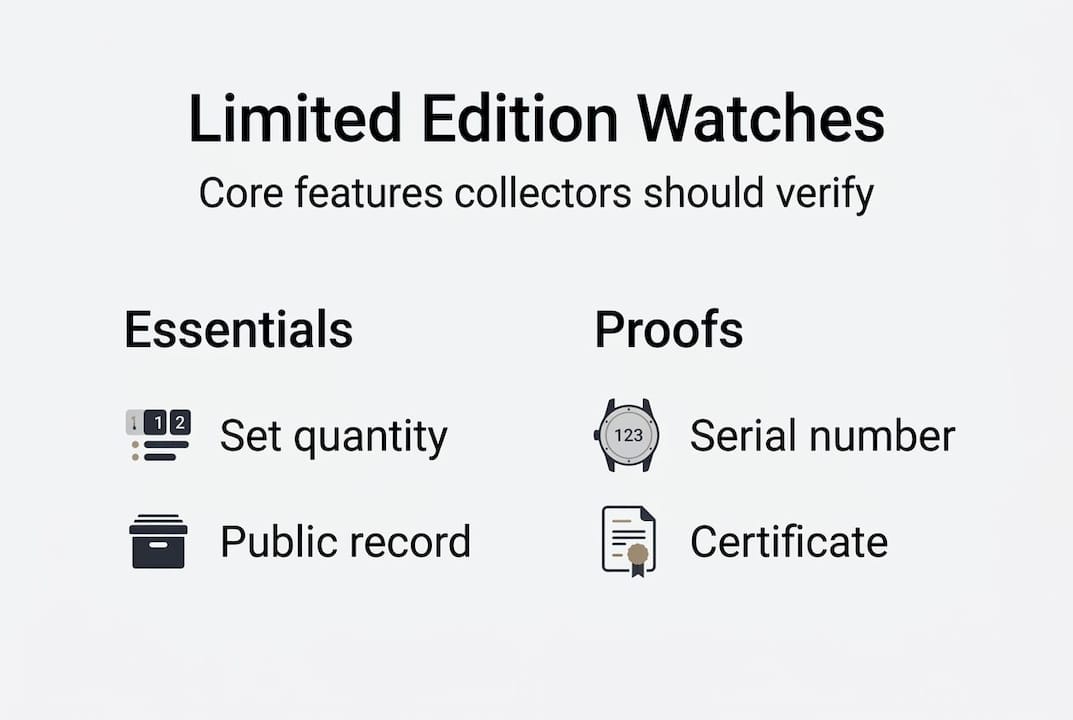
Understanding the spectrum matters. Here’s how the categories typically break down:
| Tier | Typical production run | Key features |
|---|---|---|
| High horology | 1 to 50 pieces | Hand-finished, certified, museum-documented |
| Independent microbrand | 50 to 500 pieces | Serial numbered, community verified |
| Mid-tier brand | 500 to 2,000 pieces | Certificate of authenticity, numbered caseback |
| Large brand limited run | 2,000 to 10,000+ pieces | Marketing campaign, numbered dial or strap |
Brands release limited editions for several reasons, including commemorations, collaborations, and market testing. The problem is that production caps are not always disclosed upfront, and some brands use “open-edition” numbering that keeps a series technically limited without committing to a firm total.
The markers that actually signal a real limited edition include:
- A publicly announced production total before or at launch
- Individual serial or edition numbers engraved on the caseback or dial
- A certificate of authenticity matched to the specific piece number
- Unique design features exclusive to that edition (dial color, complication, or material)
- Official brand documentation available for post-purchase verification
When you look at branded luxury watches, those markers separate a piece worth adding to your collection from one that’s simply riding a marketing wave. A thorough breakdown of limited edition watches explained can also help you set the right expectations before you buy.
Why do brands release limited editions?
Now that you know the definition, let’s dive into why brands love releasing limited editions in the first place.
The four most common motivations are straightforward:
- Commemorating milestones — anniversary models tied to founding dates, historical moments, or iconic references
- Collaborative releases — partnerships with artists, athletes, or other brands that expand reach and cachet
- Market and design testing — low-risk ways to gauge demand for new colors, complications, or materials before committing to full production
- Creating purchase urgency — scarcity, real or constructed, pushes hesitant buyers toward a decision
Methods include commemorating events and anniversaries, collaborations, testing designs, and driving urgency, and most brands use a mix of all four depending on the release.
Anniversary releases are a good case study. A brand marking its 50th year has a genuine story to tell. The limited run is tied to a real occasion, the design usually references the original reference, and the documentation is thorough. Compare that to a brand releasing a “summer blue dial” edition capped at 3,000 pieces. Nothing wrong with the watch, but the “occasion” is mostly a sales trigger.
“The most coveted limited editions are those where scarcity is a byproduct of the story, not the point of it.” That distinction is worth keeping in mind every time a new drop lands in your inbox.
Pro Tip: Before purchasing, research whether the brand regularly releases “limited” editions. If a brand drops four or five limited editions per year across multiple references, the word carries less weight than it does from a brand that releases one meaningful edition every few years. Brand watch strategies can help you read the intent behind any release.
For collectors who are choosing a piece as a gift, the motivation behind the edition adds real meaning to the gesture. Knowing the story makes gifting luxury watches far more personal and deliberate. A brand marketing analysis can also help you separate genuine occasions from manufactured ones.
How can you verify a watch’s limited status?
So when confronted with a tempting “limited edition,” how can you be sure it’s the real deal?
Verification through official press releases, serial numbers, certificates, blockchain or NFC tags, and registries gives you multiple checkpoints before committing to a purchase. You rarely need all of them, but knowing which to use matters.

Here’s a comparison of traditional and modern verification methods:
| Method | Traditional | Modern |
|---|---|---|
| Proof of edition | Paper certificate of authenticity | NFC chip or QR code linked to brand registry |
| Serial tracking | Caseback engraving matched to purchase receipt | Blockchain ledger with immutable ownership record |
| Independent verification | Authorized dealer confirmation | Third-party horological registry or collector database |
| Resale validation | Physical documents passed with the watch | Digital passport transferable on resale |
The practical steps you should follow:
- Request the certificate first — before payment, ask to see the numbered certificate and confirm it matches the caseback engraving
- Cross-reference with brand records — most reputable brands maintain a registry you can contact directly
- Check official press releases — the announced production total should match the number on your piece
- Use authorized retailers only — especially for high-value editions, avoid grey market sources without documentation
- Search collector forums — communities often track known fakes or misrepresented editions in real time
If you’re uncertain, pause. A legitimate seller will welcome your due diligence, not rush you past it.
Pro Tip: When exploring customizing luxury watches, personalization itself can serve as a form of provenance. A well-documented custom piece with unique components is inherently one of a kind, which matters to collectors who value watch craftsmanship as much as brand name. Learning about distinctive watch styles also helps you spot what sets a genuine edition apart from a standard release with a new strap.
Understanding value: Scarcity, demand, and market realities
Even after verifying the watch, understanding the market realities will help you make smarter collector decisions.
Scarcity drives demand, but liquidity and turnover are now key metrics alongside pure rarity. A watch produced in just 50 pieces sounds exclusive, but if there’s no secondary market interest, it won’t hold value the way a 500-piece run from a beloved brand might.
The major value drivers include:
- Production run size — smaller runs generally command higher premiums, all else being equal
- Brand cachet — a limited edition from an established name carries more weight than one from an unknown brand
- Demand at launch — oversubscribed releases that sell out instantly signal strong secondary market potential
- Liquidity — how easily the watch trades on resale platforms like Chrono24 or WatchBox matters for long-term value
- Documentation completeness — full original packaging, certificate, and purchase receipt preserve value considerably
Market realities are less romantic. Many “limited” editions never sell out. Unsold inventory quietly enters grey market channels at steep discounts, which undercuts the exclusivity story entirely. Some brands deliberately set caps high enough to guarantee sell-through, which tells you their priority is revenue, not rarity.
“Neo-vintage” editions complicate things further. A watch released in a run of 2,000 a decade ago may now trade above retail simply because surviving, documented examples are genuinely scarce. Time creates the scarcity that the production number failed to.
New collectors often make one predictable mistake: they focus entirely on the edition number and ignore demand signals. A market value analysis of secondary prices before you buy is a smarter move than trusting the original marketing. Also, pay attention to unique watch dials as design-driven exclusivity often sustains demand longer than a number alone.
A collector’s perspective: How to judge true exclusivity
With expert advice in mind, here’s a more opinionated take for fellow collectors.
Marketing has become sophisticated enough to blur the lines almost completely. Some releases use limited numbers as the entire value proposition, with no meaningful design story or occasion behind them. That’s not wrong, but it is something you should see clearly before spending.
What serious collectors actually look for is transparency. A brand that publicly announces its total production run, provides verifiable documentation, and doesn’t repeat the same “limited” concept every season earns more trust than one that keeps the numbers vague. Vague numbers are almost always a warning sign.
Value the story and emotion behind a piece, but demand proof. A 100-piece anniversary edition with documented craftsmanship in watch collecting is worth far more than a 500-piece run with nothing but a special dial color. Focus on provenance: who made it, why, how many, and where’s the paperwork. If a seller can’t answer those four questions clearly, walk away.
The most satisfying pieces in any collection tend to be the ones with genuine stories, not just the ones with the smallest numbers.
Explore distinctive limited edition and custom watches
If you’re inspired to add a distinctive piece to your collection, here’s where to start your search.
At Røwn Jewelry, we bring together a curated selection of timepieces for collectors who want something more than the standard shelf offering. Whether you’re after a ready-to-wear limited edition or something you design yourself, our platform gives you real options.
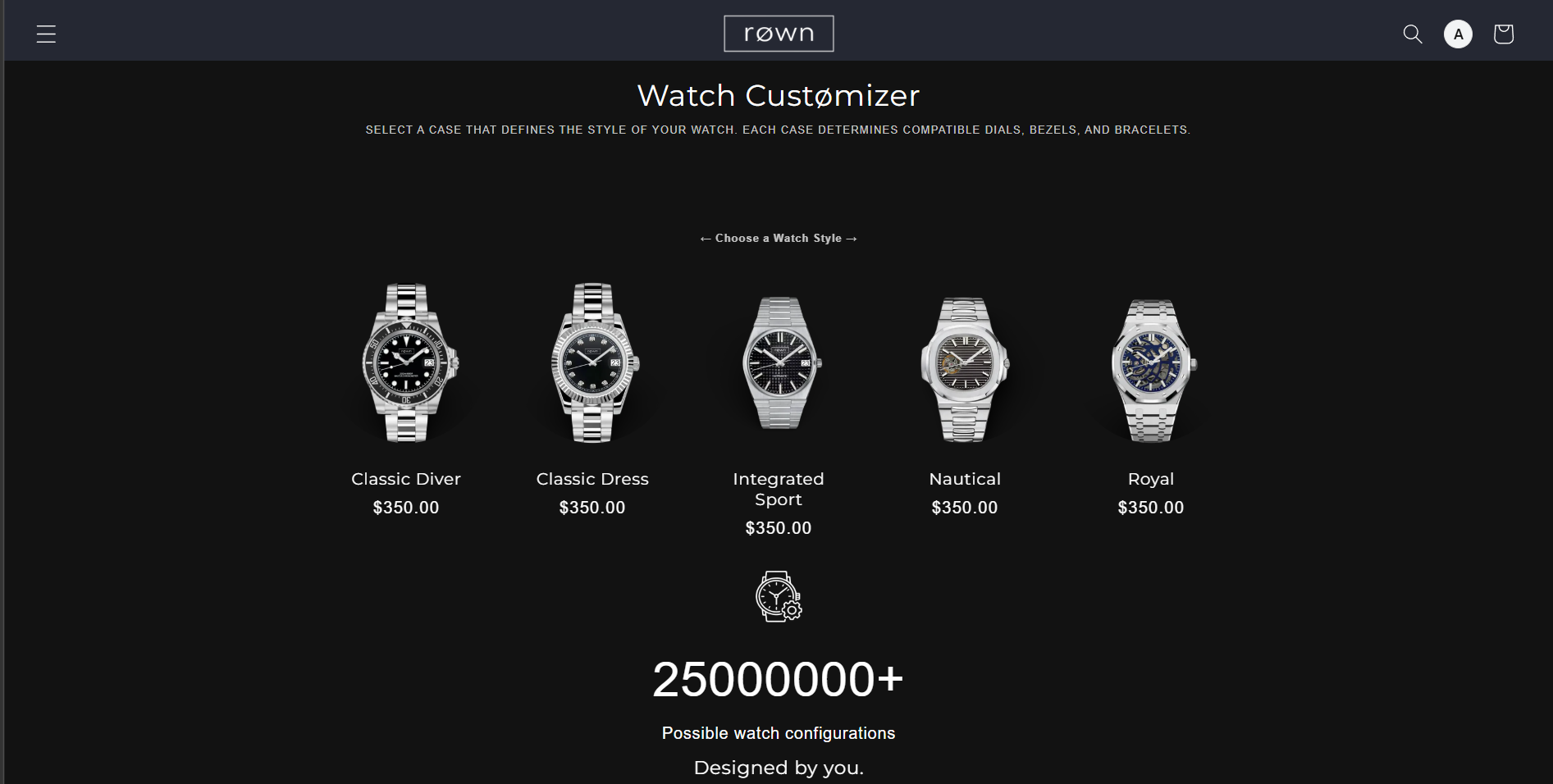
Browse men’s limited edition watches or discover women’s limited edition watches across our current collections. If you want something that’s genuinely one of a kind, our custom diver watches let you choose every component, making provenance something you build yourself. That’s exclusivity with full transparency.
Frequently asked questions
How do I distinguish a genuine limited edition watch from a marketing gimmick?
Always check for official documentation, serial numbers matching production totals, and transparent production figures published by the brand before or at launch.
Do limited edition watches actually increase in value?
Only select models with strong market demand hold or grow in value. Scarcity drives demand, but most limited editions do not appreciate significantly on the secondary market.
What should I look for when buying a limited edition as a gift?
Prioritize brand reputation, official documentation, and a compelling story behind the edition. A piece with a clear occasion and provenance carries far more meaning than one with only a numbered caseback.
Can independent brands produce limited edition watches?
Yes, and many do so with complete integrity. Microbrands may release runs of around 75 pieces or fewer, often with stronger community transparency than larger brands.