

TL;DR:
- Unique watch dials are characterized by rare materials, artisan craftsmanship, and customizable options.
- Techniques like Urushi lacquer and Grand Feu enamel create one-of-a-kind, highly valued, and visually striking dials.
- Choosing a dial that resonates personally ensures a meaningful connection beyond brand prestige.
Finding a watch dial that truly stands out is harder than it sounds. Most luxury timepieces look impressive at first glance, but genuine individuality comes from the materials and techniques behind the dial itself. Whether you’re drawn to the organic depth of Urushi lacquer, the fired brilliance of Grand Feu enamel, or the raw beauty of meteorite, the dial is where a watch becomes personal. This guide walks you through the criteria for evaluating exceptional dials, the standout techniques worth knowing, and how to make a choice that reflects your taste and values as a collector.
Table of Contents
- Criteria for choosing unique watch dials
- Urushi lacquer dials: The organic artistry of Japanese tradition
- Enamel dials: Grand Feu and Cloisonné techniques
- Rare material dials: Stone, meteorite, and more
- Our unique take: What truly sets a watch dial apart?
- Explore custom and luxury watch options at røwn
- Frequently asked questions
Key Takeaways
| Point | Details |
|---|---|
| Choose for artistry | Selecting dials crafted with rare techniques ensures real uniqueness in your timepiece. |
| Consider rare materials | Materials like Urushi lacquer and meteorite offer visual appeal and exclusivity. |
| Personalize for impact | Bespoke dial options and artisan finishes create a luxury watch that reflects your individuality. |
| Ask about craftsmanship | Understanding how a dial is made helps gauge its value and long-term appeal. |
Criteria for choosing unique watch dials
Before you invest in a luxury timepiece, it helps to know what separates a truly exceptional dial from one that simply looks expensive. There are four key areas to evaluate.
Material rarity is the starting point. Some dials use materials that are genuinely scarce or require extraordinary effort to source. Urushi lacquer, for example, is derived from the sap of the Rhus verniciflua tree and applied in multiple layers to achieve a deep, mirror-like finish. Urushi lacquer dials incorporate gold and silver particles through multiple polishing cycles, and because the organic process varies slightly each time, no two dials are identical. Grand Feu enamel and precious stones like malachite or onyx are equally rare choices.
Artisan technique matters just as much as material. Hand-finishing, Cloisonné enamel work, and multi-step firing processes all require skilled craftspeople who spend hours on a single dial. This kind of labor cannot be replicated by machines, which is exactly what gives these dials their value.
Customization potential is another factor worth weighing. Some dials can be ordered with bespoke motifs, personalized color combinations, or unique textures. If you want a watch that reflects your identity rather than a brand’s catalog, this is essential. Learning how to build your own watch from the ground up gives you full control over dial selection and design.
Brand reputation also plays a role. Makers like Grand Seiko and Chopard have built their names on dial artistry. That reputation signals consistent quality and access to master craftspeople.
Here’s a quick checklist when evaluating any dial:
- Is the material rare or difficult to source?
- Does the production involve hand-finishing or multi-stage artisan work?
- Can the design be customized to your specifications?
- Does the brand have a documented history of dial craftsmanship?
- Is the dial repairable if damaged?
Pro Tip: Always ask about maintenance and repairability before purchasing an artisanal dial. Some techniques, like Urushi lacquer, require specialists for restoration. Knowing this upfront protects your investment.
With evaluation criteria in mind, let’s highlight dials crafted from rare materials.
Urushi lacquer dials: The organic artistry of Japanese tradition
Urushi lacquer is one of the most respected dial techniques in horology, and for good reason. The process starts with sap harvested from the Rhus verniciflua tree, which is then refined, colored, and applied to the dial surface in carefully controlled layers. Each layer must dry completely before the next is added, a process that can take weeks.
What makes Urushi dials genuinely special is the organic nature of the material itself. Urushi lacquer dials made from Rhus verniciflua tree sap involve gold and silver particles, multiple polishing cycles for a mirror shine, and are inherently one-of-a-kind due to the natural variation in the process. You can order two identical Urushi dials from the same artisan and still receive two distinct pieces.
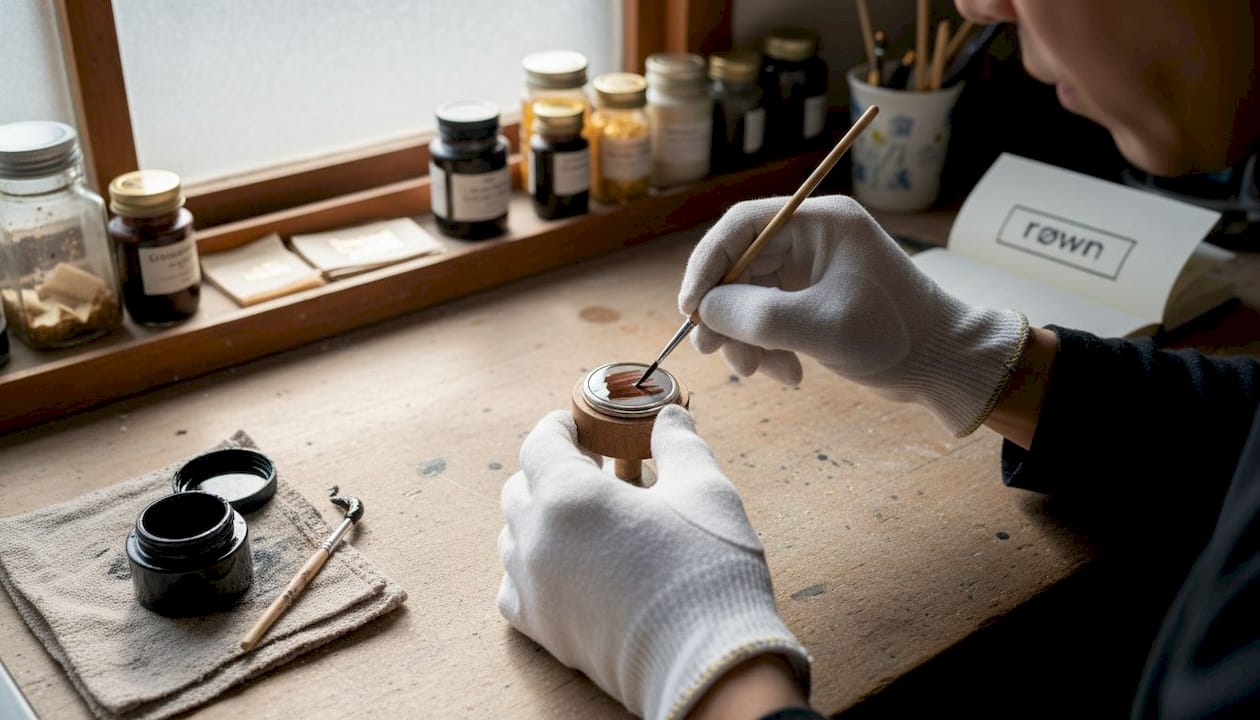
Grand Seiko is the most recognized name in Urushi dial production, often collaborating with traditional Japanese lacquer artists. Chopard has also incorporated the technique into select collections. These partnerships between watchmakers and craftspeople are what elevate Urushi from a material choice to a cultural statement.
If you’re considering men’s watches with Urushi dials, here are the hallmarks to look for:
- A deep, layered finish with visible texture and depth
- Subtle variations in color or pattern that confirm handwork
- Gold or silver accents embedded within the lacquer
- A surface that appears to shift slightly under different lighting
- Documentation of the artisan or workshop involved
“No two Urushi dials are identical, highlighting true artisanal craftsmanship.”
Pairing an Urushi dial with the right hands makes a significant difference in the final look. Thoughtful customizing of watch hands can either contrast with the lacquer’s richness or complement it, depending on your preference. If you want a true one-of-one luxury piece, Urushi is one of the strongest choices available.
Having explored Urushi’s artistry, let’s look at another legendary technique: Grand Feu enamel.
Enamel dials: Grand Feu and Cloisonné techniques
Enamel dials represent some of the most technically demanding work in watchmaking. Two techniques stand above the rest: Grand Feu and Cloisonné.
Grand Feu dials are fired at ultra-high temperatures for a glass-like luster, while Cloisonné employs gold wires to create intricate artistic motifs filled with enamel. Both require extraordinary patience and skill, and both carry a price point that reflects that reality.
Here are the key steps in creating an enamel dial:
- Surface preparation: The metal base is cleaned and treated to accept enamel properly.
- Gold wiring (Cloisonné only): Thin gold wires are bent and placed to define the design’s outlines.
- Enamel application: Powdered enamel is applied within the outlined areas or across the full surface.
- Firing: The dial is placed in a kiln at extremely high temperatures. Grand Feu requires multiple rounds of firing.
- Polishing: The surface is refined between firings to remove imperfections and build depth.
- Final inspection: Each dial is checked for color consistency, surface quality, and structural integrity.
| Feature | Grand Feu | Cloisonné |
|---|---|---|
| Primary material | Powdered enamel | Powdered enamel + gold wire |
| Firing temperature | Very high (multiple rounds) | High (fewer rounds) |
| Visual result | Smooth, glass-like surface | Raised wire outlines, artistic motifs |
| Common brands | Jaeger-LeCoultre, Patek Philippe | Vacheron Constantin, Grand Seiko |
| Customization | Limited color palette | High, due to wire-based design flexibility |
Understanding what goes into these dials helps you evaluate branded luxury watches more accurately. It also helps you spot when a brand is charging a premium that the craftsmanship genuinely justifies. For more on how dial artistry fits into distinct luxury watches, the design context matters as much as the technique itself.
Pro Tip: When shopping for enamel dials, ask the retailer or brand for specific details about the firing process and number of layers. Brands that can answer this clearly are the ones investing in genuine craftsmanship.
With enamel dials covered, let’s examine how rare materials further elevate dial uniqueness.
Rare material dials: Stone, meteorite, and more
Beyond traditional lacquer and enamel, a growing number of watchmakers are turning to unconventional materials to create dials that are visually striking and genuinely scarce. Certain watches feature dials crafted from rare or organic materials, contributing to uniqueness and luxury appeal in ways that standard finishing cannot match.
The most popular rare dial materials include:
- Malachite: A vivid green stone with natural banding patterns. No two slices look the same, and the color is rich without any artificial treatment.
- Meteorite: Sliced from actual iron-nickel meteorites, these dials display a Widmanstätten pattern, a crystalline structure that only forms over millions of years in space. It is literally impossible to replicate.
- Mother-of-pearl: Harvested from mollusk shells, this material produces an iridescent shimmer that shifts with the light. It’s a popular choice for dress watches and women’s timepieces.
- Onyx and obsidian: Deep black stones that create a bold, dramatic dial surface with natural variation in texture.
- Aventurine: Sometimes called “galaxy glass,” this material contains sparkling mineral inclusions that resemble a starfield.
| Feature | Rare stone/meteorite | Traditional enamel |
|---|---|---|
| Uniqueness | Extremely high (no two identical) | High (hand-applied, but reproducible) |
| Durability | Moderate (stone can crack) | High (glass-like surface is resilient) |
| Visual impact | Bold, natural, unexpected | Refined, artistic, precise |
| Collector appeal | Very strong | Strong |
| Customization | Low (material dictates design) | Moderate to high |
Rare material dials are best suited for statement pieces or collector’s items. If your goal is to own something that cannot exist twice in the same form, a meteorite or malachite dial delivers that. Understanding mechanical watch design helps you pair the right movement with a dial this distinctive. And if you’re exploring automatic watch advantages, a rare material dial pairs naturally with a high-quality automatic movement for a complete luxury package.
You now know the key dial types. Let’s synthesize these options for decision-making.
Our unique take: What truly sets a watch dial apart?
Most conversations about luxury watch dials focus on brand names and price points. We think that misses the point. The brands that produce the most talked-about dials are impressive, but the watches that stay with collectors for decades are the ones that carry personal meaning.
A Grand Seiko Urushi dial is remarkable because of the craft behind it, not because of the logo on the caseback. A meteorite dial is extraordinary because of what it is, not because of its retail price. When you choose a dial based on what genuinely resonates with you, whether that’s the organic warmth of lacquer or the cosmic strangeness of meteorite, you end up with a watch you actually connect with.
“The rarest watches aren’t just expensive. They’re personal.”
Customization is where this becomes actionable. Choosing custom watch straps that complement your dial’s texture and color is a small decision that dramatically changes how a watch feels to wear. Collector choices reflect individuality far more than marketing ever could. Don’t let brand cachet be the only factor. Let the craftsmanship and your own taste lead.
Explore custom and luxury watch options at røwn
At røwn, we believe the dial is where your watch becomes yours. Our collections include timepieces featuring artisanal finishing, rare materials, and high-quality craftsmanship across every price point.
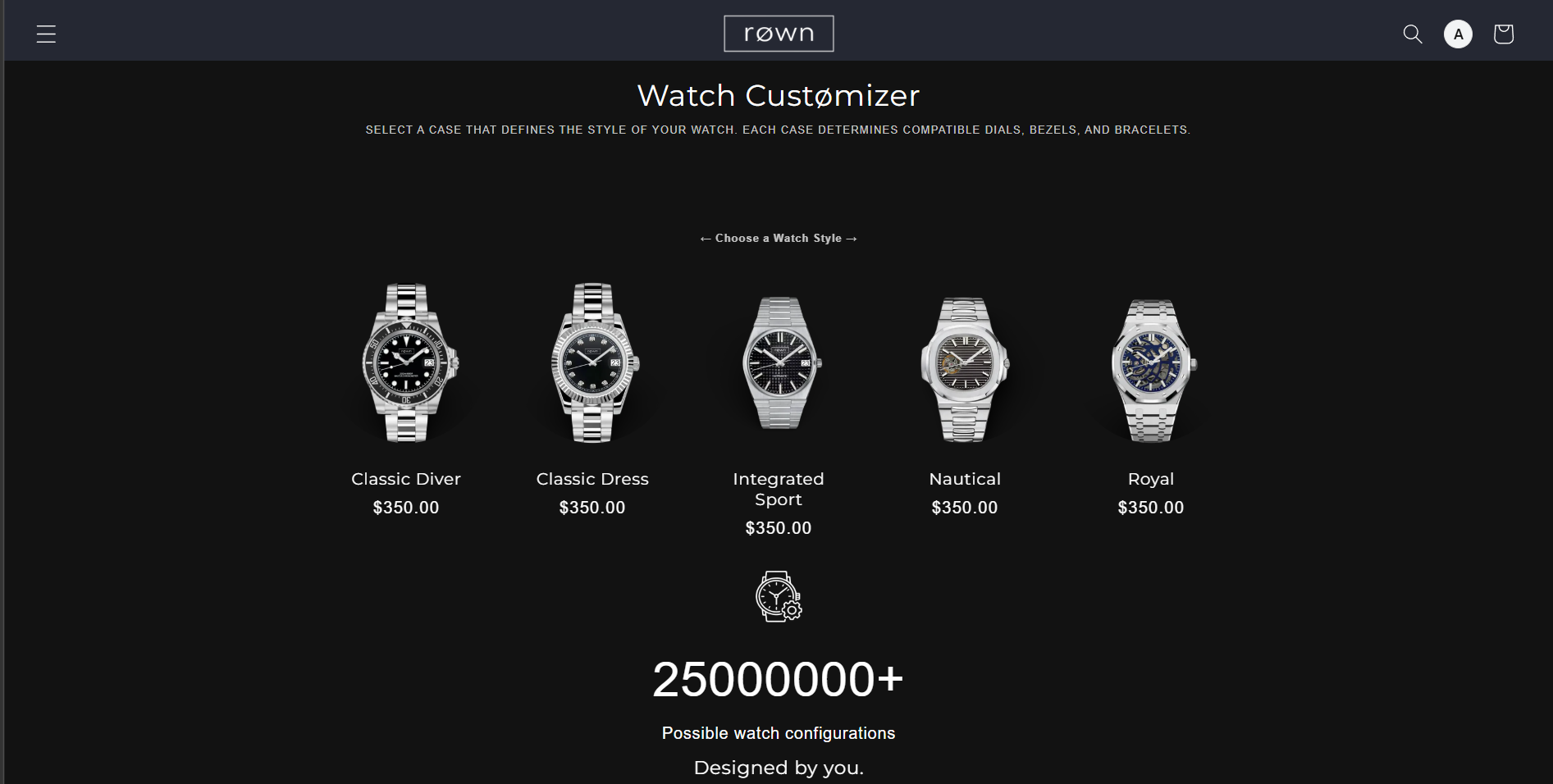
Whether you’re drawn to the depth of an Urushi-inspired finish or want to design something entirely your own, røwn gives you the tools to do it. Browse men’s watches and women’s watches to see what’s available, or go further and configure your own custom diver watch with the dial, case, and bracelet combination that fits your vision. Every detail is yours to decide.
Frequently asked questions
What makes Urushi lacquer dials unique?
Urushi dials use organic tree sap combined with gold and silver particles, applied in multiple stages and polished to a mirror finish. Because the organic process varies naturally each time, every dial is genuinely one-of-a-kind.
How are Grand Feu enamel dials made?
Grand Feu enamel dials are fired at ultra-high temperatures in multiple rounds, which builds up a glass-like surface with vibrant, lasting color. The repeated firing is what gives the finish its depth and durability.
Does using rare materials increase a watch’s value?
Yes. Dials made from rare organic materials like meteorite or precious stones enhance exclusivity significantly and often increase a watch’s desirability and resale value among serious collectors.
Can I customize the motif or color on luxury watch dials?
Many high-end brands and custom platforms offer bespoke dial options, including personalized motifs and color choices. Cloisonné enamel dials, in particular, allow for significant design flexibility due to the gold wire construction.
Are Urushi or enamel dials difficult to maintain?
These dials require careful handling and, in some cases, specialized cleaning and restoration by trained artisans. With proper care, both Urushi and enamel dials are highly durable and can last for generations.