

TL;DR:
- Men aged 25-34 value status, craftsmanship, and heritage over brand prestige alone.
- Key evaluation factors include movement type, materials, fit, and practical complications.
- Personalization and real-use fit are essential for a watch to truly reflect individual style.
Most people assume men buy luxury branded watches purely for the name on the dial. That assumption is wrong. Research shows 70-75% of male buyers are motivated by status and craftsmanship together, not brand prestige alone. For men aged 25-34, mechanical movement quality, personal style, and the ability to customize a timepiece matter just as much as heritage. This guide cuts through the noise. You’ll learn how to evaluate what truly makes a watch worth owning, how to personalize it, and which complications and benchmarks separate exceptional pieces from forgettable ones.
Table of Contents
- Why luxury branded watches matter for men 25-34
- How to evaluate branded watches: movements, materials, and heritage
- Personalization and customization: making luxury truly yours
- Benchmarks and complications: what separates icons from pretenders
- The overlooked truth: what really matters when choosing your branded watch
- Next steps: explore customizable luxury watches and jewelry
- Frequently asked questions
Key Takeaways
| Point | Details |
|---|---|
| Mechanical movements are preferred | Automatic and manual mechanical watches appeal most to men 25-34 seeking craftsmanship and luxury. |
| Customization enhances value | Personal engravings, dial changes, and bespoke commissions add meaning and distinction to branded watches. |
| Heritage and comfort matter | Ideal watch choices reflect both brand legacy and practical wearability for daily style. |
| Complications boost appeal | Desired complications include chronograph, GMT, and open-heart features prized by young enthusiasts. |
Why luxury branded watches matter for men 25-34
The watch market for men aged 25-34 is not driven by impulse. It’s driven by a clear set of values. Status plays a role, but it’s status earned through knowledge and taste, not just a logo. When you wear a Rolex or an Audemars Piguet, you’re communicating something specific about how you think and what you care about.
Social media has reshaped aspirations in this space. Platforms like Instagram and YouTube have made mid-tier brands like Tudor, Longines, and Nomos more visible than ever. You don’t need to spend $50,000 to signal sophistication. A well-chosen Tudor Black Bay or an Omega Seamaster speaks volumes.
Here’s what drives men in this age group to seek out luxury watch motivations and act on them:
- Status and identity: A watch is one of the few remaining pieces of jewelry men wear daily. It signals taste without saying a word.
- Mechanical appreciation: Automatic and manual movements are preferred because they represent real engineering. A quartz battery feels disposable by comparison.
- Heritage and legacy: Brands with decades of history carry weight. You’re buying into a story that started long before you were born.
- Customization potential: More buyers want a watch that feels personal, not just purchased.
- Investment mindset: Certain references hold or increase value over time, which matters to this financially aware demographic.
“The Holy Trinity brands and Rolex lead the market not because of marketing, but because of heritage and complications that have stood the test of decades.”
The brands that consistently appear at the top of the conversation are Patek Philippe, Audemars Piguet, Vacheron Constantin, Rolex, Omega, and Tudor. Each one earns its place through a combination of movement quality, design consistency, and brand story. If you’re exploring where to start, the men’s luxury watches overview gives you a strong foundation for understanding what’s available at different price points.
After understanding the real drivers behind luxury branded watches, let’s look at how to evaluate what makes a watch truly special.
How to evaluate branded watches: movements, materials, and heritage
Buying a luxury watch without a clear evaluation framework is how you end up with regret. There are seven pillars you should assess before committing to any piece.
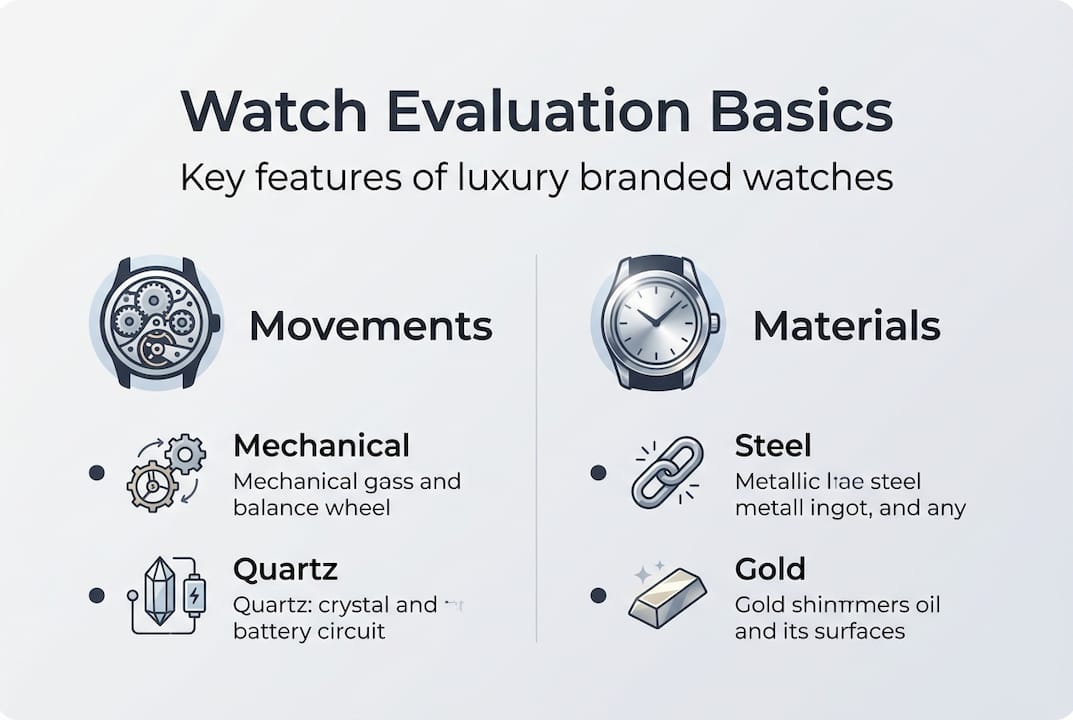
- Movement type: Mechanical movements, both automatic and manual wind, are the gold standard for enthusiasts. Automatic in-house calibers are especially prized because they reflect a brand’s engineering capability. Learn more about how watch movement and craftsmanship affect the feel of a watch over time.
- Materials: Case material (stainless steel, titanium, gold), crystal type (sapphire is standard at this level), and bracelet construction all affect durability and feel.
- Heritage: How long has the brand been making this reference or movement? Consistency over decades signals real quality.
- Wearability: This is the most underrated pillar. A watch that looks great in photos but sits wrong on your wrist is a bad purchase.
- Complications: Features beyond timekeeping, such as chronograph, GMT, or date, add function and visual interest.
- Style: Does it match your wardrobe and lifestyle? A dress watch in a sport environment looks out of place.
- Price: Entry-level luxury starts around $2,000-$5,000. True in-house movements typically start at $5,000 and up.
The watch buying evaluation framework recommends defining your use case first, then working through movement, materials, heritage, and wearability with ideal sizes before making any decision.
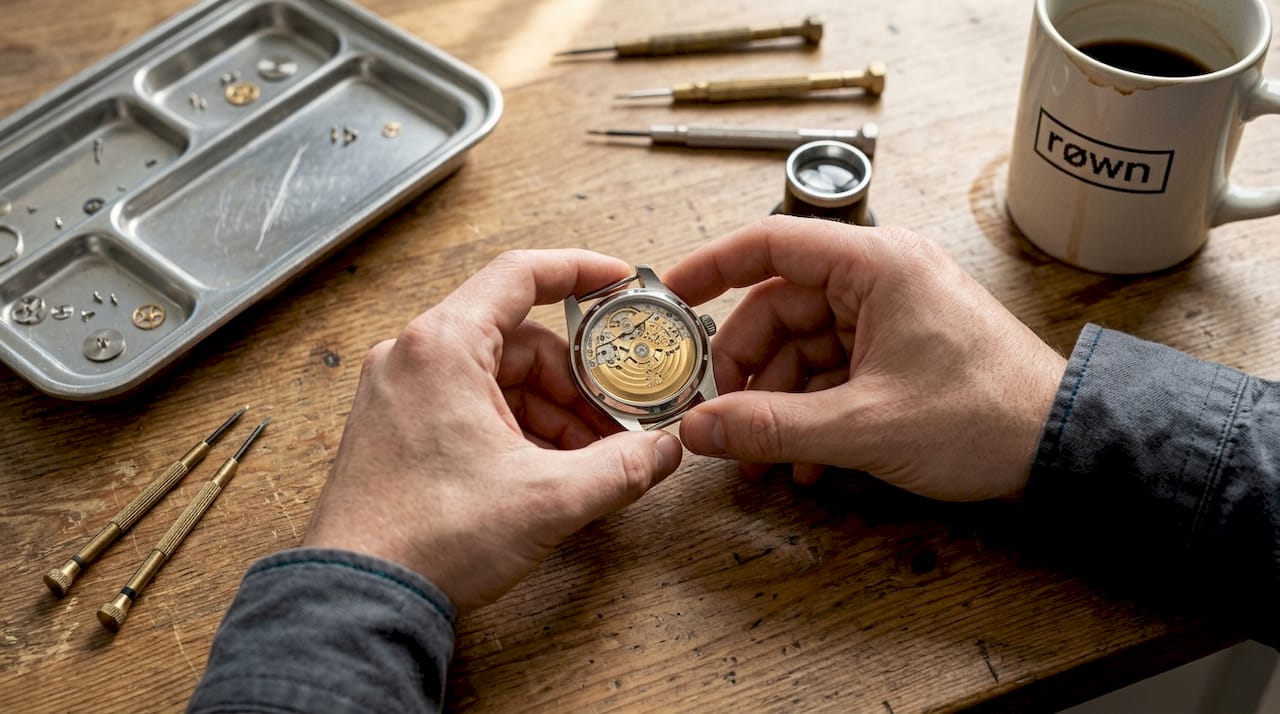
Pro Tip: Always check the lug-to-lug distance, not just the case diameter. A 42mm watch with a lug-to-lug over 50mm will overhang most wrists and feel uncomfortable all day. Aim for 39-42mm case diameter with a lug-to-lug under 50mm for the best fit.
Here’s a quick comparison to help you decide on movement type:
| Feature | Mechanical (automatic) | Quartz |
|—|—|—|
| Power source | Movement of the wrist | Battery |
| Accuracy | +/- 5-20 sec per day | +/- 15 sec per month |
| Servicing | Every 5-7 years | Battery replacement |
| Prestige | High | Low to moderate |
| Price range | $1,500 and up | $50 to $2,000+ |
| Collector appeal | Strong | Limited |
For a deeper look at how movement type shapes your options, the guide on precision and customization breaks it down clearly. You can also explore distinct watch styles to see how movement choices pair with design aesthetics.
With the evaluation framework established, next comes customization and how to make a branded watch uniquely yours.
Personalization and customization: making luxury truly yours
Customization is where a luxury watch stops being a purchase and starts being a statement. The good news is that there are more options available now than ever before, across every budget level.
Here are the most practical customization methods available today:
- Engraving: The most common form of personalization. Back case engravings are popular for gifts. If you plan to engrave the caseback, buy a spare caseback first so the original remains pristine.
- Dial personalization: Some brands and aftermarket services allow custom dial colors, textures, or applied indices.
- Bracelet swaps: Changing from a metal bracelet to a leather strap or NATO strap completely transforms the look and feel of a watch.
- Bezel choices: On sport watches, swapping bezels (where the design allows) changes the color story and function of the piece.
- Bespoke commissions: At the ultra-luxury level, brands like Patek Philippe and Audemars Piguet offer bespoke services for clients who want something entirely one-of-a-kind.
“Social media has accelerated mid-tier brand aspirations, pushing buyers toward brands like Tudor and Longines for customizable entry points into luxury.”
The custom watch builder guide walks you through how to approach building a watch from scratch, selecting components that work together both aesthetically and mechanically. If you want to focus specifically on dial and hands, the guide on customizing watch appearance covers the details.
Pro Tip: Before committing to any custom feature, wear a similar reference for a day if possible. Complications and design choices that look great in photos sometimes create practical issues, like crown placement digging into your hand or a busy dial that’s hard to read quickly.
Customization also affects resale value. Factory original pieces with unmodified casebacks and dials typically hold value better. That’s why keeping the original caseback when you engrave is such a practical move.
Now that customization is clear, let’s explore how practical benchmarks and complications shape your choices.
Benchmarks and complications: what separates icons from pretenders
Not all complications are created equal, and not all watches that look impressive actually perform. Here’s how to cut through the marketing and assess a watch on real terms.
The four most sought-after complications for men 25-34:
- Chronograph: A stopwatch function built into the watch. The Omega Speedmaster and Zenith El Primero are two of the most studied chronographs in horology, each with different beating rates and column wheel designs that affect feel and precision.
- GMT: Displays a second time zone. Essential for frequent travelers and a clean complication that doesn’t add visual clutter.
- Open-heart: Exposes part of the movement through the dial. It’s a style-forward complication that connects you visually to the mechanics inside. The iconic complications explained guide covers this in detail.
- Tourbillon: A rotating cage that counteracts gravity’s effect on accuracy. Mostly a prestige complication at this point, but visually stunning.
Here’s how top brands compare on key performance benchmarks:
| Brand | Power reserve | Daily accuracy | Shock resistance |
|---|---|---|---|
| Rolex | 70 hours | +2/-2 sec | Excellent |
| Omega | 60 hours | +5/-3 sec | Very good |
| Tudor | 70 hours | +4/-1 sec | Very good |
| Patek Philippe | 45-55 hours | +2/-2 sec | Excellent |
| Zenith | 50-60 hours | +5/-2 sec | Good |
Standard benchmarks to use when evaluating any luxury watch:
- Power reserve should be at least 40 hours, with 60-70 hours being the modern standard for daily wearers.
- Daily accuracy should fall within -20 to +40 seconds for entry-level mechanical, and within +/- 5 seconds for certified chronometers.
- Shock resistance should meet or exceed NIHS 91-10 standards for any watch you plan to wear actively.
- Check chronograph benchmarks by looking at column wheel vs. cam-lever designs. Column wheel is generally smoother.
Statistic callout: The modern standard for luxury automatic movements is a power reserve of 40-70 hours, with COSC-certified chronometers required to meet accuracy of +6/-4 seconds per day.
Having clarity on benchmarks, complications, and icons, it’s time to reflect on what most guides overlook and what truly matters.
The overlooked truth: what really matters when choosing your branded watch
Here’s something most buying guides won’t tell you: brand prestige is the least reliable factor in a good watch purchase. It’s also the easiest one to get seduced by.
The watches that people genuinely love after five years of daily wear are the ones that fit their wrist well, match their real lifestyle, and have movements they find genuinely interesting. Not the ones they bought because a YouTube channel said it was the right status symbol.
Mechanical craftsmanship always outlasts hype. A movement with a real in-house caliber, proper finishing, and a solid service network will serve you better than a branded case with an outsourced movement dressed up in marketing language.
Wearability is the most ignored factor in this space. You can read about style matching tips all day, but if the watch doesn’t sit right on your wrist or doesn’t work with how you actually dress, you’ll stop wearing it within a year.
Complications and custom features only matter if they fit your life. A GMT is useless if you never travel. A tourbillon is beautiful but impractical for daily wear. Buy what you’ll actually use and enjoy.
Next steps: explore customizable luxury watches and jewelry
You now have a clear framework for evaluating, choosing, and personalizing a luxury branded watch. The next step is putting that knowledge to work.
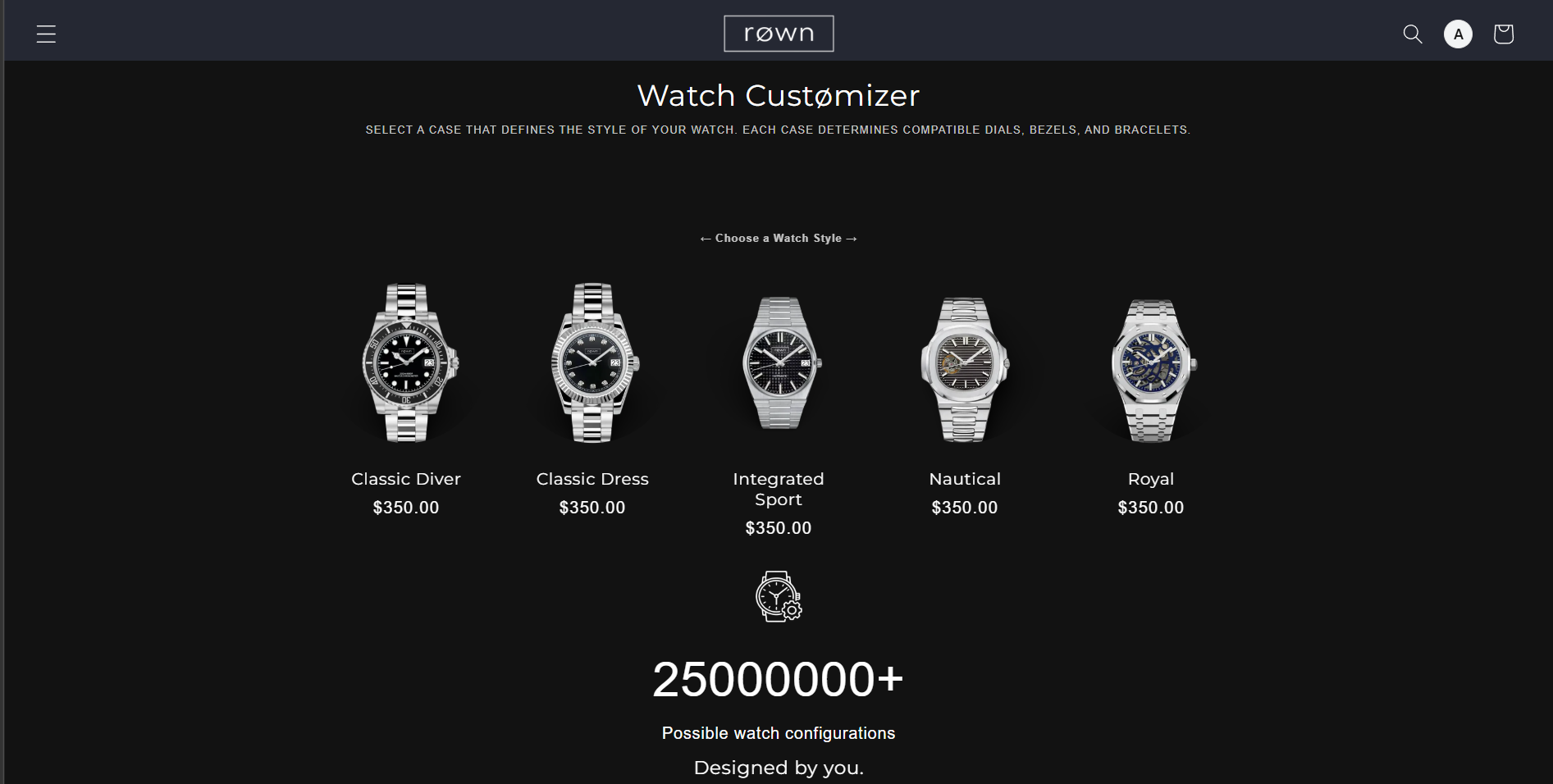
At Røwn Jewelry, you can apply everything covered in this guide directly. Browse the full shop men’s branded watches collection to explore options across styles and price points. If you want something built specifically for you, the custom diver luxury model lets you choose components from the case to the dial. And if you’re pairing your timepiece with a complete look, the luxury bracelets collection offers pieces that complement any watch perfectly. Free shipping and a top-rated customer experience make it easy to start.
Frequently asked questions
What mechanical movement types are most popular among men aged 25-34?
Automatic in-house calibers are most valued for craftsmanship and daily reliability, followed by manual wind movements for enthusiasts who enjoy the ritual of winding.
How can I customize a luxury branded watch for a unique look?
Popular options include dial engravings, bracelet swaps, and buying a spare caseback so you can engrave without affecting the original piece’s resale value.
What case size is ideal for comfort and style in men’s luxury watches?
For men 25-34, a case size of 39-42mm with a lug-to-lug distance under 50mm offers the best balance of modern style and all-day comfort.
What watch complications are most sought after in the 25-34 age group?
Chronograph, GMT, and open-heart complications are highly prized for combining visual appeal with real-world functionality that fits an active lifestyle.
How important is heritage when buying a branded watch?
Heritage is a core factor. Brands like Patek Philippe, Audemars Piguet, and Rolex are consistently sought after because their legacy and quality are backed by decades of proven performance.
Recommended
- Luxury watches crafted for your distinct style in 2026 – røwn
- Style matching watches: elevate your look in 2026 – røwn
- Mechanical watches: How movements and design elevate luxury – røwn
- How to customize watch hands for a unique luxury look – røwn
- Master the luxury jewelry shopping workflow: bespoke guide – Maison Valderre