

TL;DR:
- Proper watch fit and placement are essential for style and comfort.
- Match your watch to the occasion, outfit, and accessories for a cohesive look.
- Personalize your watch through sizing, stacking, and custom details to express individual style.
Styling a watch sounds simple until you’re standing in front of your closet, unsure whether your diver watch works with a blazer or if your leather strap clashes with your sneakers. Many men feel the tension between classic rules and personal expression. Your watch isn’t just a time-telling tool. It’s one of the few accessories that signals your taste, confidence, and attention to detail at a glance. This guide gives you a clear, practical framework for choosing, wearing, and pairing watches with any outfit or occasion, so you can stop second-guessing and start wearing your watch with intention.
Table of Contents
- Master the basics: Fit, wrist, and etiquette
- Pair your watch with your outfit: Matching formality and colors
- Size matters: Proportion, dial, and watch case tips
- Advanced style moves: Stacking, accessories, and custom luxury touches
- The real secret to watch style: Rules are a starting point
- Ready to upgrade your watch game?
- Frequently asked questions
Key Takeaways
| Point | Details |
|---|---|
| Fit and wear | Aim for a snug fit on your non-dominant wrist for comfort and style. |
| Match to outfit | Choose watch type, strap, and colors to coordinate with your clothes and accessories for polished looks. |
| Size and proportion | Select a watch case size that suits your wrist for a balanced, modern appearance. |
| Personal touches | Experiment with custom engravings, materials, and even stacking to express your personality. |
Master the basics: Fit, wrist, and etiquette
Before you think about style, you need to get the fundamentals right. A watch that fits badly will undercut even the sharpest outfit.
Which wrist to wear it on
Wearing your watch on your non-dominant wrist is the traditional standard. Right-handers wear it on the left. Left-handers wear it on the right. This keeps the crown (the small winding knob on the side) out of the way during daily tasks and reduces the risk of accidental damage.
That said, rules evolve. Some younger men wear watches on their dominant wrist as a deliberate style choice. If you do it with intention, it works.
Getting the fit right
Fit is where most men go wrong. Your strap or bracelet should sit snug against your wrist, but not tight. A good test: you should be able to slide one finger underneath the strap comfortably. Too loose and the watch slides around, looks sloppy, and risks getting scratched.
Here’s what proper fit looks like in practice:
- Snug but breathable: One finger fits underneath the strap
- No spinning: The watch face stays centered on your wrist
- No gaps: The case sits flush, not floating above your skin
- Dress watch clearance: A slim luxury timepiece should slide easily under your shirt cuff without bunching
The “loosey-goosey” trend, where the watch hangs loosely for a casual, relaxed look, has picked up traction in streetwear circles. It can work for casual outfits. But for business or formal settings, keep it snug.
“A well-fitted watch should feel like a natural extension of your wrist, not an afterthought.”
Pro Tip: If you’re building a custom watch, choose a bracelet or strap with micro-adjustment options. These small sizing increments make a big difference in achieving a precise, comfortable fit.
After understanding the importance of wearing your watch properly, the next step is matching it to your outfit.
Pair your watch with your outfit: Matching formality and colors
The single biggest mistake men make is wearing the wrong watch for the occasion. A chunky diver watch with a tuxedo sends a mixed signal. A slim dress watch with board shorts looks just as off.

Formality first
Match your watch to the formality level of your outfit. Dress watches belong with suits and formal wear. Sport and diver watches belong with casual and smart-casual outfits.
Here’s a quick comparison:
| Feature | Dress watch | Casual/sport watch |
|---|---|---|
| Case size | Under 40mm | 40mm and above |
| Thickness | Under 11mm | 12mm or more |
| Strap | Leather | Metal, rubber, NATO |
| Dial | Minimal, black or white | Bold colors, indices |
| Best for | Suits, formal events | Jeans, casual, outdoors |
Color coordination
Color matching is straightforward once you know the rules. Coordinate your metals and leather tones intentionally. Steel watches pair with silver accessories. Gold-tone watches pair with gold rings or cufflinks. Mixing metals is a bold move that can work, but only if it’s clearly deliberate.
For leather straps, match the tone to your belt and shoes:
- Brown strap: Pairs with tan, cognac, or dark brown leather shoes and belts
- Black strap: Pairs with black shoes and belts for formal looks
- White or light dial: Best for daytime and formal occasions
- Dark or colored dial: Works well for evening events or casual outfits
Explore style matching strategies to go deeper on coordinating your watch with your full wardrobe. You can also browse men’s watch options to see how different dial and strap combinations look together.
Pro Tip: When in doubt, go minimal. A clean white or black dial on a slim leather strap works with almost any formal or smart-casual outfit.
Once you know how to pair your watch with your outfit, consider how to properly size and scale it for your wrist.
Size matters: Proportion, dial, and watch case tips
Watch sizing isn’t just about personal preference. Proportion matters. A watch that’s too large on a small wrist looks costume-like. One that’s too small on a large wrist disappears.
Wrist size and case size
Proportion to wrist size is a key factor. A 36-40mm case fits most wrists in the 15-17cm range. Go larger if your wrist is wider, smaller if it’s narrower.
Here’s a quick reference table:
| Wrist circumference | Recommended case size |
|---|---|
| Under 15cm | 34-38mm |
| 15-17cm | 38-42mm |
| Over 17cm | 42mm and above |
How to find your fit in four steps
- Measure your wrist with a soft tape measure or a strip of paper. Note the circumference in centimeters.
- Check lug-to-lug width. The lug-to-lug distance (the measurement across the case from one lug tip to the other) should not exceed your wrist width.
- Consider thickness. Cases under 11mm are formal and slip under cuffs easily. Thicker cases (12mm or more) read as sporty or statement pieces.
- Test it in context. Try the watch with and without a sleeve. A great watch should look intentional in both situations.
Statistic to know: Most men’s watches sold today fall between 40-44mm, but the growing preference for slimmer, more refined pieces is shifting that range back toward 38-40mm for everyday wear.
Custom watches give you an advantage here. You can select the exact case size, thickness, and dial combination that fits your wrist and your wardrobe. Preview tools let you see how custom hands options and case proportions look before you commit.
With your fit and style matched, it’s time to add personal flair with advanced pairing and stacking strategies.
Advanced style moves: Stacking, accessories, and custom luxury touches
Once you’ve nailed the basics, you can start experimenting. Stacking and accessorizing are where your personal style really shows up.
Bracelet and ring stacking
Stacking watches and bracelets is a polarizing topic in men’s fashion. Done well, it adds depth and personality to your look. Done poorly, it creates visual clutter and risks scratching your watch case.
Here’s how to stack smartly:
- Match your theme: Choose bracelets in materials or colors that echo your watch (e.g., leather beads with a leather-strap watch)
- Keep it to two or three pieces: More than that and you lose the focal point
- Avoid heirlooms: Don’t stack precious or sentimental pieces that could get scratched
- Leave space: Pieces should sit next to each other, not press against the case
“Stacking should enhance your watch, not compete with it. The watch is still the anchor.”
Custom luxury touches
Personalization is where a watch becomes truly yours. Custom luxury watches can include engraving, wood or metal dials, unique strap materials, and mechanical movements that reflect your taste and values.
For example:
- Wood dials pair naturally with earth tones and casual, nature-inspired outfits
- Engraving on the case back adds meaning without changing the exterior look
- Automatic movements (self-winding, powered by wrist motion) are preferred over quartz for prestige and craftsmanship
Learn more about personalizing luxury watches and explore custom strap benefits to see how swapping a strap can completely transform a watch’s personality. For those interested in what’s inside, mechanical movement insights break down why automatic movements feel and wear differently over time.
Pro Tip: For creative events or fashion-forward settings, intentionally break a classic rule. Wear your watch over your cuff, or choose a bold dial that clashes with your outfit on purpose. Confidence makes it work.
Now that you’ve mastered all facets of watch styling, let’s look at why these rules matter and when they’re worth breaking.
The real secret to watch style: Rules are a starting point
Here’s something most style guides won’t tell you: the rules exist to give you a foundation, not a ceiling. Every rule in this article is a starting point. The men who actually look great in watches aren’t the ones who followed every guideline perfectly. They’re the ones who learned the rules, understood why they exist, and then made deliberate choices about when to break them.
Wearing your watch on the right wrist? That can become your signature. Mixing steel and gold? Bold, but it works when you commit to it. Stacking a diver with leather bracelets at a rooftop event? That’s personality.
The goal isn’t compliance. It’s intention. When you understand style-matching insights, you stop dressing by accident and start dressing with purpose. Choosing a watch should feel exciting, not stressful. Experiment. Try things. Your style is a living thing, and your watch should grow with it.
Ready to upgrade your watch game?
You now have a clear framework for wearing, sizing, pairing, and personalizing your watch. The next step is finding the right piece to put it all into practice.
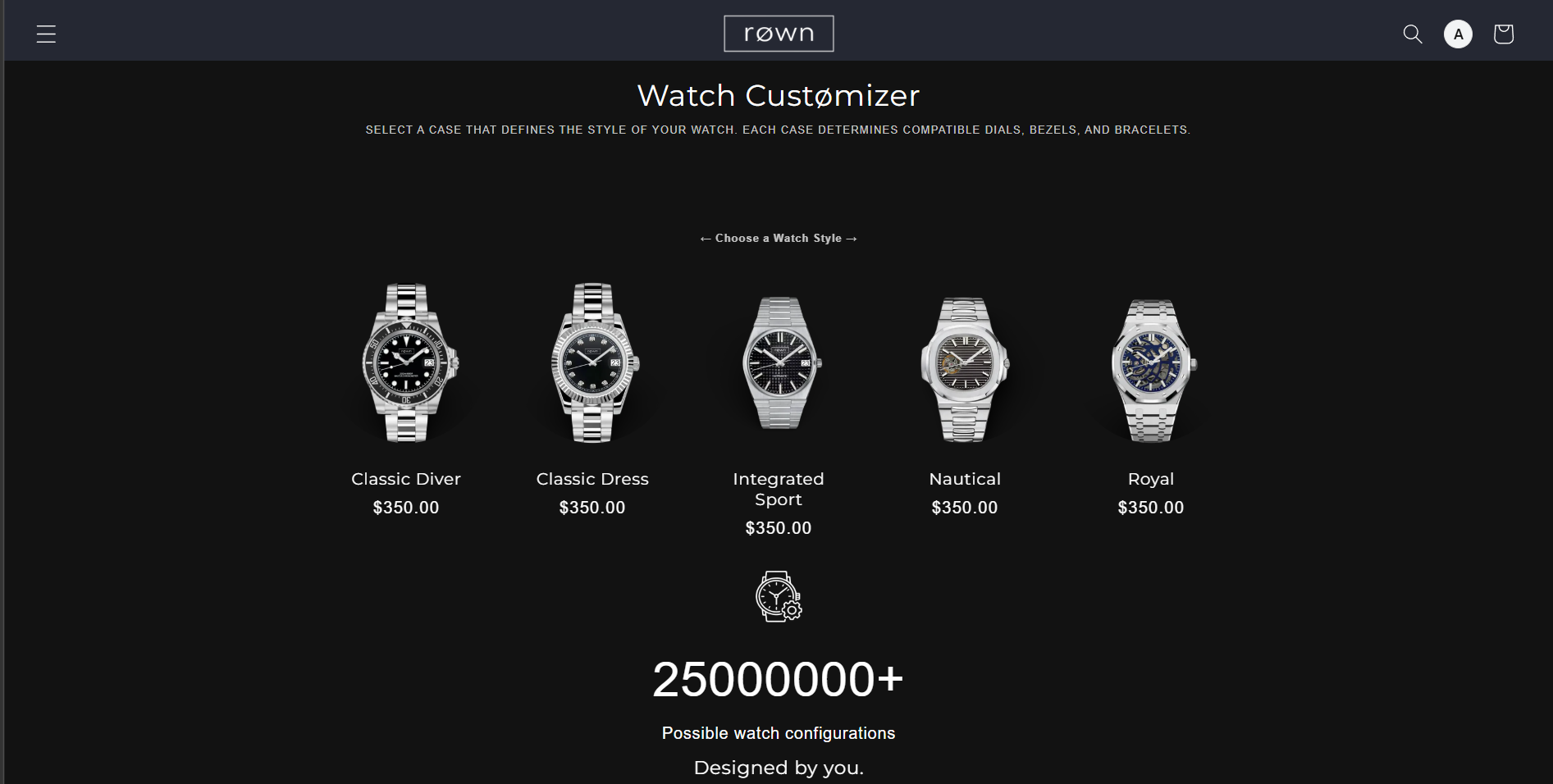
At Røwn, you can explore men’s watches across a curated range of styles, from sleek dress pieces to bold sport designs. Pair your timepiece with pieces from the bracelets collection to build a cohesive wrist stack. Or go fully custom with the custom diver watch and design a piece that’s built around your exact taste. Free shipping, premium materials, and a build-your-own experience that puts you in control.
Frequently asked questions
Which wrist should men wear a watch on?
Men traditionally wear watches on their non-dominant wrist, left for right-handers and right for left-handers, for comfort and etiquette. Some men wear it on the dominant wrist as a personal style choice, and that’s fine too.
Is it okay to stack bracelets with a luxury watch?
Stacking can add personality, but it risks scratching your watch case and can distract from the piece itself. Keep stacks minimal and avoid pairing bracelets with heirloom or highly valuable watches.
How do I match my watch to my outfit?
Match watch formality to your outfit: use a slim dress watch for suits and formal occasions, and sport or diver watches for casual looks. Coordinate leather tones with your belt and shoes, and match metals to other accessories.
What case size should I choose for my wrist?
A 36-40mm case fits most wrists in the 15-17cm range. Go larger for bigger wrists and smaller for narrower ones, and always check that the lug-to-lug width doesn’t exceed your wrist width.