

TL;DR:
- Automatic watches use movement to wind and power a mechanical movement, offering a unique connection to tradition.
- They feature luxury details like exhibition case backs, hand-finished dials, and customizable components.
- While less accurate than quartz, automatics provide engaging ownership, potential value growth, and a craftsman’s legacy.
Choosing a luxury watch means balancing a lot of competing demands. You want something that looks exceptional, tells a story, and holds meaning beyond its price tag. Automatic watches have answered that call for centuries, offering a rare combination of mechanical artistry, personal expression, and everyday wearability. Whether you’re buying your first serious timepiece or adding to a growing collection, understanding what separates an automatic from other watch types helps you invest with confidence. This guide breaks down the real advantages, from the mechanics inside to the style on your wrist.
Table of Contents
- How automatic watches work: The engine behind the elegance
- Aesthetic appeal and the luxury experience
- Functionality and everyday performance
- Personalization, heritage, and collectible status
- Cost, ownership, and decision factors: Is an automatic right for you?
- Why the ‘imperfections’ make automatic watches more meaningful
- Discover your next iconic automatic watch
- Frequently asked questions
Key Takeaways
| Point | Details |
|---|---|
| Mechanical craftsmanship | Automatic watches showcase intricate engineering powered by your movements. |
| Luxury and personalization | They offer visual elegance and can be customized for a unique, personal style. |
| Tradition meets technology | Owning one connects you to time-honored traditions and modern innovation. |
| Satisfying ownership | The routine care and minor imperfections deepen the bond between owner and watch. |
How automatic watches work: The engine behind the elegance
An automatic watch runs on movement, literally. Inside the case sits a rotor, a weighted half-circle that spins freely as your wrist moves throughout the day. That spinning motion winds the mainspring, a coiled strip of metal that stores energy and releases it gradually to power the watch. No battery required.
The energy release is controlled by the escapement, which divides time into equal beats. The speed of those beats is measured in vph, or vibrations per hour. A movement running at 28,800 vph produces a smooth, sweeping seconds hand rather than the tick-tick-tick you see on a quartz watch. That sweep is one of the most recognizable signs of a quality automatic.
Here’s what makes the mechanism worth understanding:
- Rotor: Converts wrist movement into winding energy
- Mainspring: Stores and releases power to drive timekeeping
- Escapement: Regulates energy release for consistent beat
- vph (vibrations per hour): Higher rates mean smoother motion and better accuracy
- Hacking seconds: A feature that stops the seconds hand when you pull the crown, allowing precise time-setting
For anyone interested in mechanical movements explained in greater depth, understanding the rotor-to-mainspring relationship is the foundation. And if you want to compare this to other options, a full breakdown of watch movement types covers the full landscape.
Pro Tip: If you wear your watch daily, the rotor will keep it wound automatically. If you leave it sitting for more than 40 hours, give it 20 to 30 manual winds via the crown before wearing it again.
Aesthetic appeal and the luxury experience
With the mechanics established, let’s see how those inner workings translate into visual luxury and tactile satisfaction.
The sweeping seconds hand is just the beginning. Many automatic watches feature exhibition case backs, a transparent window on the rear that lets you watch the movement in action. Seeing gears turn and the rotor spin is genuinely captivating, and it’s a detail that separates automatics from nearly every other category of timepiece.
Custom dials, hand-applied indices, and finishing techniques like brushing and polishing add layers of visual depth that you simply don’t find in mass-produced quartz watches. These are the details that define luxury watch style and make a watch feel like it belongs in a different category entirely.
Key aesthetic advantages of automatic watches:
- Exhibition case backs that reveal the movement
- Smooth sweeping seconds hand at high beat rates
- Hand-applied hour markers and detailed dial finishing
- Wide range of case materials including steel, titanium, and gold
- Customizable components like dials, hands, and bezels
“Purists value the ‘soul’ of mechanics over quartz precision; automatics reward interaction but demand maintenance vs. quartz set-and-forget.”
That word, soul, comes up often among collectors. It’s not just marketing language. When you wear an automatic, you’re aware that the watch is responding to you, powered by your movement, calibrated to your life. That’s a different relationship than slipping on a battery-powered device. For guidance on finding pieces that match your personal aesthetic, exploring branded luxury watches and learning how to choose watches to match your style are strong starting points.
Functionality and everyday performance
Visual appeal is essential, but how do automatics stand up to the realities of daily wear and accuracy?
Let’s be direct: automatics are less accurate than quartz, typically varying by a few seconds per day compared to quartz, which may drift only seconds per month. Factors like position, shock, and magnetism can affect timekeeping. High-end regulated movements narrow this gap significantly, but it’s a real difference worth knowing.
That said, modern automatics are built for real life. Most feature shock resistance, water resistance, and anti-magnetic protection adequate for daily wear.
| Feature | Automatic | Quartz | Manual wind |
|---|---|---|---|
| Accuracy | ±5 sec/day | ±15 sec/month | ±5 sec/day |
| Power source | Wrist movement | Battery | Manual winding |
| Maintenance | Service every 5 to 7 years | Battery swap every 1 to 3 years | Service every 5 to 7 years |
| Ownership feel | Engaging, interactive | Convenient, low effort | Intimate, deliberate |
| Collectible appeal | High | Low to moderate | High |
For a deeper look at movement accuracy comparison across movement types, the differences become clearer when you factor in how you actually use a watch day to day.
How to maintain your automatic and keep it running well:
- Wear it regularly or use a watch winder to keep it wound
- Wind manually after extended storage before wearing
- Keep it away from strong magnets (speakers, bag clasps, laptop edges)
- Rinse with fresh water after salt water exposure if water-resistant
- Schedule a professional service every 5 to 7 years
- Store in a watch box or pouch to protect the crystal and case
For a full overview of care routines and setup guidance, the watch care tips page is a practical resource. Pairing good habits with the right piece ensures your automatic stays accurate and looks sharp for years. Accuracy and style don’t have to be in conflict when you choose the right movement for your lifestyle.
Personalization, heritage, and collectible status
Beyond day-to-day practicality, automatics excel where tradition and personal expression meet.

Customization is one of the strongest reasons to choose an automatic in 2026. Modern platforms let you select dials, hands, case finishes, bezels, and bracelets to build something that’s genuinely yours. That level of control over a mechanical object is rare and deeply satisfying. Learning how to customize watch hands alone can transform the look of a piece entirely.
There’s also the heritage angle. Mechanical watchmaking dates back centuries, and owning an automatic connects you to that tradition. It’s not nostalgia for its own sake. It’s an appreciation for a craft that has survived and evolved despite every technological alternative.
High-end automatics with regulation can rival quartz accuracy despite their mechanical complexity, making the heritage argument even stronger when precision matters to you.
| Customizable feature | Style impact | Value impact |
|---|---|---|
| Dial color and texture | High | Moderate |
| Hand style (sword, baton, Mercedes) | Moderate | Low to moderate |
| Bezel type (smooth, fluted, ceramic) | High | High |
| Case finish (brushed vs. polished) | Moderate | Moderate |
| Bracelet material (steel, leather, rubber) | High | Moderate |
Automatics also hold and sometimes increase in value over time, especially limited editions and well-maintained pieces with documented service history. That makes them a legitimate collectible, not just a fashion accessory.
Pro Tip: When choosing custom features, prioritize what you’ll enjoy wearing every day first. Resale value follows quality and originality, but personal satisfaction is what keeps you reaching for a watch each morning. The custom watch builder guide walks you through the process step by step.
Cost, ownership, and decision factors: Is an automatic right for you?
With all dimensions considered, here’s how to decide if an automatic belongs in your personal collection.
The upfront cost of a quality automatic is higher than a comparable quartz watch. But the long-term math often favors automatics. No battery replacements, no disposable parts, and a well-serviced movement can last a lifetime. The cost of ownership spreads over decades, not years.
Two benchmarks worth knowing: COSC-certified movements must perform within -4 to +6 seconds per day. Rolex’s Superlative Chronometer standard tightens that to ±2 seconds per day. These figures show how much precision is achievable in a regulated automatic, and they matter when you’re spending serious money.
Here’s how to decide if an automatic fits your life:
- Accuracy priority: If you need precision within seconds per month, quartz is more practical
- Engagement preference: If you enjoy wearing and interacting with your watch, automatics reward that habit
- Collectible goals: If you want a piece that holds or grows in value, automatics are the stronger choice
- Customization interest: If you want to build something unique, automatic platforms offer far more options
- Daily wear style: If your lifestyle is active and varied, choose a movement with shock and magnetic resistance
- Budget horizon: Factor in servicing costs every 5 to 7 years when calculating total ownership cost
For help matching a specific piece to your taste and budget, the guide to choosing your luxury watch covers the key decision points clearly.
Why the ‘imperfections’ make automatic watches more meaningful
As you consider the facts, let’s explore why many watch lovers, ourselves included, prefer living with the ‘imperfections’ of automatic timepieces.
Owning an automatic is a lot like driving a manual car. You’re more involved. You notice things. The slight variation in timekeeping from day to day isn’t a flaw you tolerate; it’s a reminder that something mechanical and intricate is working on your behalf. That engagement changes how you relate to the object.
Perfection isn’t always the goal. Quartz watches are more accurate, no question. But accuracy alone doesn’t create attachment. The ritual of winding, the satisfaction of seeing a movement through an exhibition back, the knowledge that why movement matters goes far beyond timekeeping, these are the things collectors talk about years after the purchase.
Automatics invite you into a centuries-old tradition. Every time you set the time or feel the weight of a well-built case on your wrist, you’re participating in something with real history. That’s not a marketing claim. It’s what separates a watch you wear from a watch you keep.
Discover your next iconic automatic watch
Ready to move from insight to ownership? At Røwn, we’ve curated a collection of men’s automatic watches built for style, durability, and full personalization.
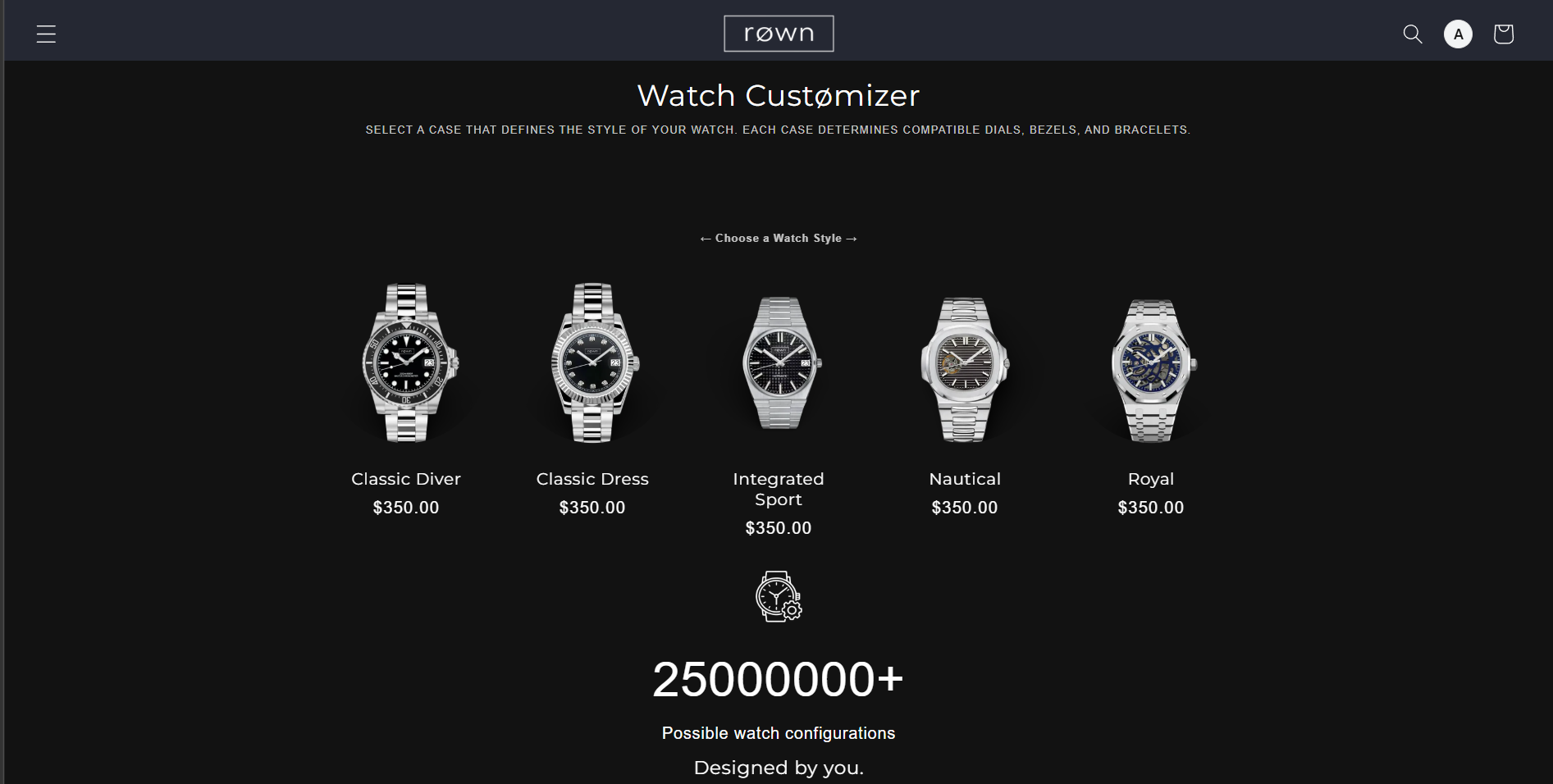
Browse men’s automatic watches with options to customize dials, hands, bezels, and more. If you want something bold and water-ready, the Custom Diver collection is a strong starting point. For travelers and style-conscious wearers, the Custom GMT adds dual-timezone function with a refined look. Every piece ships free, and our build-your-own platform makes it easy to create a timepiece that genuinely reflects who you are.
Frequently asked questions
Are automatic watches more accurate than quartz watches?
No. Quartz watches are more accurate, typically deviating just seconds per month, while automatics vary by a few seconds per day depending on the movement and conditions.
Do automatic watches require maintenance?
Yes. Most automatics need professional servicing every 5 to 7 years, and routine maintenance like keeping them wound and away from magnets extends accuracy between service intervals.
What makes an automatic watch more valuable?
Heritage, craftsmanship, regulated movement quality, and customizable features all contribute to higher value and stronger appeal among serious collectors.
Can an automatic watch run without daily wear?
Most automatics have a power reserve of 40 to 80 hours, so they’ll stop after a few days without wear and may need manual winding or a watch winder to restart accurately.