

TL;DR:
- Artisanal watchmaking emphasizes hand-crafted techniques, limited production, and maker involvement.
- It offers personalized designs using traditional methods and premium materials, contrasting mass production.
- Collectors value artisanal pieces for authenticity, storytelling, and better repairability, especially for future generations.
Most people assume all luxury watches roll off the same automated assembly line. That assumption misses something significant. Artisanal watchmaking is a living tradition, one where skilled hands shape metal, enamel dials by fire, and finish movements under magnification. Each piece carries the mark of the person who made it. This article covers what artisanal watchmaking actually means, the techniques and materials behind it, how it compares to mass production, and why personalization has become the defining force for a new generation of collectors.
Table of Contents
- Defining artisanal watchmaking: more than tradition
- Core techniques and materials in artisanal watchmaking
- Comparing artisanal vs. mass-produced watches
- Personalization and the modern collector’s quest
- Why the future of watchmaking is personal, not just luxurious
- Bring artisanal craft to your wrist
- Frequently asked questions
Key Takeaways
| Point | Details |
|---|---|
| True art in watchmaking | Artisanal watches are crafted by hand, prioritizing quality and individuality over mass production. |
| Unique ownership experience | Personalization and storytelling are central, making each piece meaningful to its owner. |
| Value beyond luxury | Collectors value artisanal pieces not just for rarity, but for the creativity and passion invested by the maker. |
| Know what to look for | Hallmarks of artisanal watches include hand-finishing, unique materials, and limited editions. |
Defining artisanal watchmaking: more than tradition
Artisanal watchmaking has roots that stretch back several centuries. Before industrialization, every watch was made by hand. Craftsmen in Switzerland, England, and France spent years mastering a single skill, such as escapement work or dial decoration, and passed that knowledge down through apprenticeships. The industrial revolution changed production forever, but it never fully replaced the human element at the top of the market.
Today, artisanal watchmaking sits at the intersection of history and modern demand. Luxury watches and craftsmanship are inseparable in this context because artisanal watchmaking preserves handcraft traditions that automated production simply cannot replicate. This is not nostalgia. It is a deliberate choice made by makers and buyers alike.
What sets an artisanal piece apart from a standard luxury watch? A few defining characteristics:
- Small-batch or one-of-a-kind production: Most artisanal makers work in very limited numbers, sometimes fewer than 50 pieces per year.
- Signature techniques: Hand-engraving, guilloché (a decorative engine-turned pattern), and hand-applied indices are common markers.
- Maker involvement: The watchmaker is present at multiple stages, not just at final assembly.
- Material intention: Every component is chosen for a reason, whether aesthetic, functional, or symbolic.
“Artisanal watchmaking is not about doing things the hard way. It is about doing them the right way, with full attention at every step.”
The cultural resonance is real. Younger collectors, especially those aged 25 to 34, are drawn to objects that carry a story. Branded luxury timepieces from major houses offer prestige, but artisanal pieces offer something different: authenticity and a direct connection to the craft.
Core techniques and materials in artisanal watchmaking
Now that you know what defines artisanal watchmaking, let’s explore the actual techniques and materials involved. This is where the real depth of the craft becomes visible.
Here are the most important techniques you will encounter:
- Hand-engraving: A skilled engraver uses a burin (a small cutting tool) to carve patterns directly into metal. No two cuts are identical. This technique appears on cases, casebacks, and rotor weights.
- Grand feu enameling: Powdered enamel is applied to a dial and fired at extreme temperatures, sometimes multiple times, to create a smooth, glassy surface with intense color depth.
- Perlage and anglage: Perlage creates a circular pattern on movement plates for visual appeal. Anglage (beveling) removes sharp edges from movement components and polishes them at precise angles. Both are done by hand.
- Skeletonization: Material is carefully removed from the movement to expose its inner workings. This requires precision because too much removal weakens the structure.
- Movement decoration: Côtes de Genève (parallel stripes on movement bridges) and blued screws are traditional finishing marks that signal quality.
Artisanal customization techniques like these are what separate a watch you admire from one you can’t stop thinking about. Hand-finishing, precious metals, and traditional tools define what makes artisanal practices stand apart from factory processes.
Materials matter just as much as technique. Artisans commonly work with:
- 18k gold and platinum for cases and bezels
- Meteorite and onyx for one-of-a-kind dials
- Stabilized wood and carbon fiber for contemporary pieces
- Sapphire crystal casebacks to showcase movement work
Unique watch dials are central to the artisanal experience because the dial is the first thing you see. Unique dial design decisions are what give a watch its personality and make it instantly recognizable.
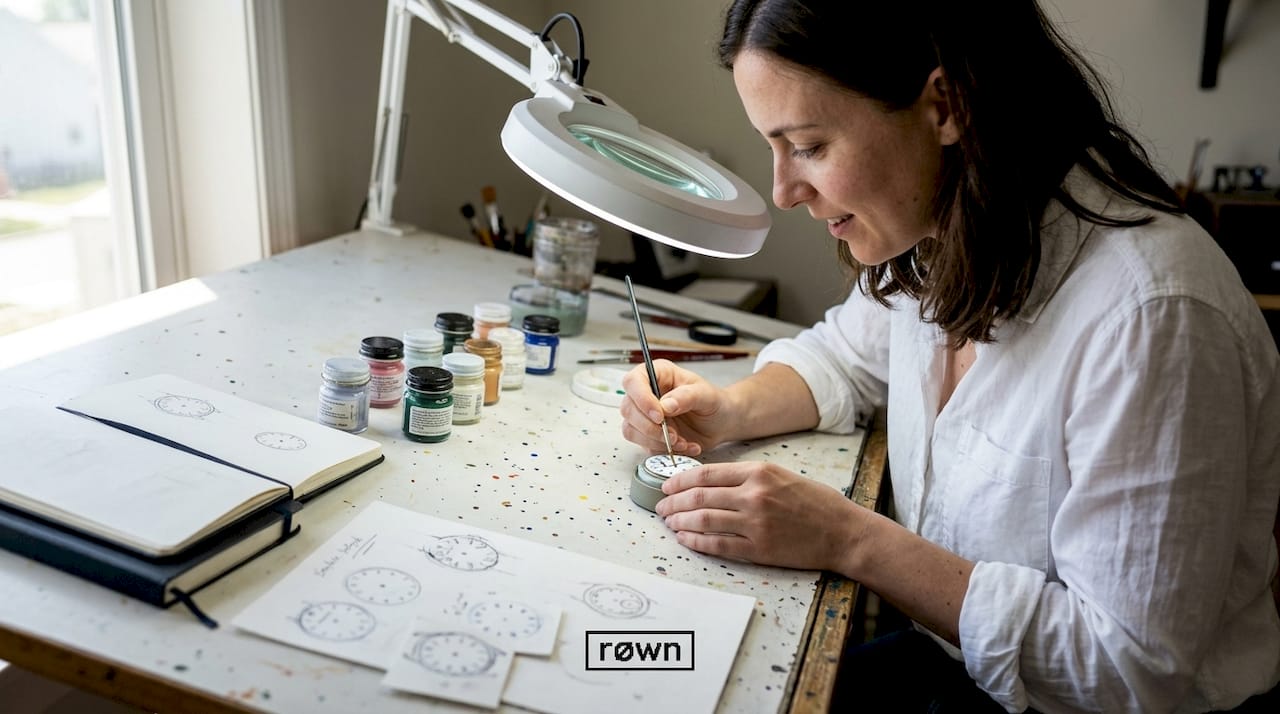
Pro Tip: When evaluating a watch for hand-finishing quality, look at the transitions between polished and brushed surfaces. Machine finishing produces uniform, sometimes slightly blurry edges. Hand finishing creates crisp, defined lines with visible tool marks under magnification.
Comparing artisanal vs. mass-produced watches
Understanding how these techniques culminate in finished watches, it is helpful to contrast artisanal craftsmanship with mass-market production.
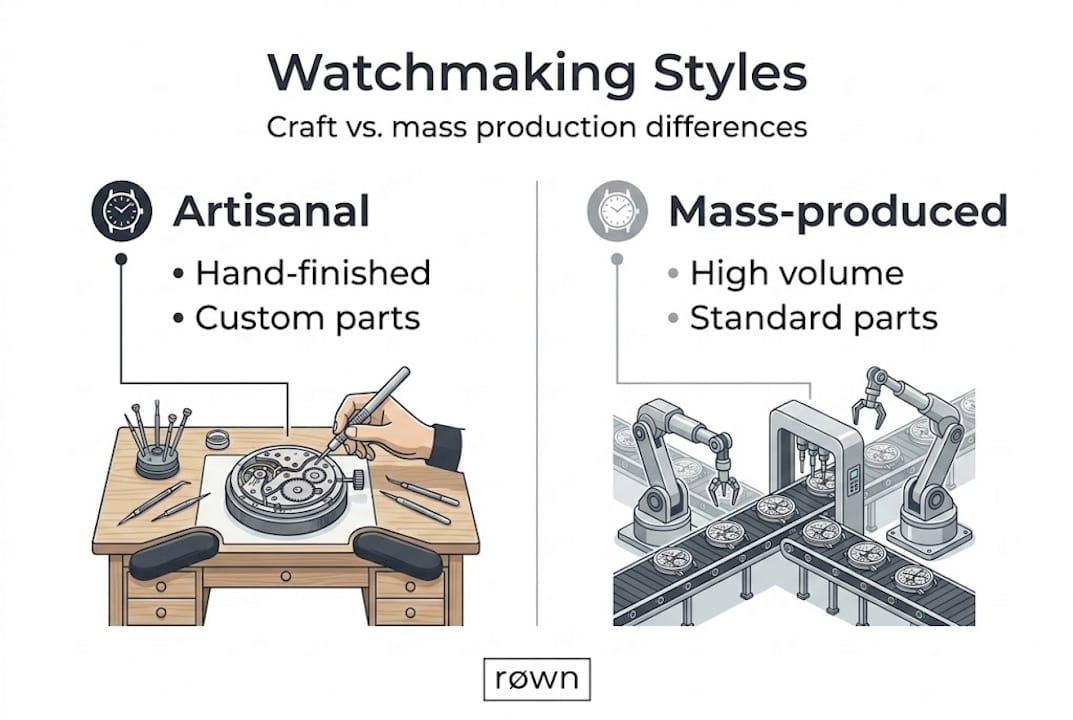
| Feature | Artisanal watches | Mass-produced watches |
|---|---|---|
| Production volume | Fewer than 500 units/year | Thousands to millions/year |
| Finishing quality | Hand-finished throughout | Machine-finished with limited handwork |
| Customization | High, often bespoke | Limited or none |
| Repairability | Easier with original makers | Parts may be discontinued |
| Value retention | Strong, especially small batches | Variable, often depreciates |
| Price range | $2,000 to well above $50,000 | $50 to $5,000+ |
Mass-produced watches prioritize affordability and consistency, while artisanal timepieces prioritize individuality and craftsmanship. Neither is wrong. They serve different purposes and different buyers.
Who chooses each? Here is a realistic breakdown:
- Artisanal buyers: Collectors who want fewer but more meaningful pieces; enthusiasts interested in horology as a craft; buyers seeking something that will not appear on anyone else’s wrist.
- Mass-produced buyers: First-time watch buyers; people who want reliable everyday timekeeping at a clear price; gift buyers working within a defined budget.
Custom watch components and careful assembly are what distinguish artisanal pieces at a technical level. When you understand mechanical movements in luxury watches, you start to see that an artisanal movement is not just more beautiful. It is often more accurate and longer-lasting because every part was inspected by human hands before assembly.
The repairability point is worth emphasizing. Mass-produced watches sometimes rely on proprietary, press-fit parts that become unavailable after a model is discontinued. Artisanal watches, especially those built around established movements, can often be repaired and serviced decades from now.
Personalization and the modern collector’s quest
Customization is the crowning benefit of artisanal watchmaking, and here is how collectors take it further.
Consider what personalization actually looks like in practice. One collector commissions a piece with a dial made from wood sourced from their grandfather’s farm. Another chooses an engraving on the caseback that matches a tattoo. A third works with a maker to select a movement that can be viewed through an open dial, referencing their engineering background. These are not hypothetical scenarios. They are the kinds of stories that surface in collector communities every month.
Personalization is a main driver of interest in artisanal watches, especially among younger collectors who see a timepiece as an extension of identity, not just a tool for telling time.
Here is a look at common customization choices and approximate costs:
| Customization option | Average cost added |
|---|---|
| Custom dial (enamel or stone) | $400 to $1,200 |
| Hand engraving (caseback) | $150 to $600 |
| Precious metal case upgrade | $800 to $3,000+ |
| Bespoke bracelet or strap | $200 to $900 |
| Movement upgrade or display back | $300 to $1,000 |
Watch customization allows for storytelling and commemorating milestones. A retirement, a wedding, a personal achievement. The watch becomes a record of that moment in a way a generic purchase never could. You can explore how to personalize luxury watches with a range of options that fit both your vision and your budget.
Pro Tip: Before working with an artisan, bring reference images of materials, finishes, and styles you respond to. Articulate the feeling you want the watch to convey, not just the look. Skilled makers use that emotional context to make better creative decisions on your behalf. For a structured approach, the steps for custom watches walkthrough is a solid starting point.
Why the future of watchmaking is personal, not just luxurious
Most coverage of artisanal watchmaking focuses on heritage. The old ateliers, the founding masters, the century-old techniques. That framing is accurate, but it misses what is actually happening right now.
The shift is not about where watches come from. It is about what they mean to the person wearing them. Personalized luxury is reshaping how new generations collect and appreciate watches, and that change is accelerating. Buyers in their late 20s and early 30s are not impressed by brand heritage alone. They want to know who made their watch, why specific choices were made, and how they can be part of that process.
The makers who will lead the next decade are not necessarily the ones with the longest history. They are the ones who open their workshops to collaboration, who let buyers influence design decisions, and who treat each commission as a conversation rather than a transaction.
There is a real tension here, though. Personal luxury watchmaking requires balancing timeless technique with evolving personal taste. Not every customization idea is technically feasible. Not every preference aligns with what makes a watch last 50 years. The best artisans navigate this honestly, telling you when an idea will weaken the piece rather than just agreeing to everything. That honesty is itself a sign of craftsmanship.
Bring artisanal craft to your wrist
Ready to bring everything you have learned into action? Artisanal watchmaking is not a passive interest. It is something you can participate in directly, choosing components, materials, and finishes that reflect who you are.
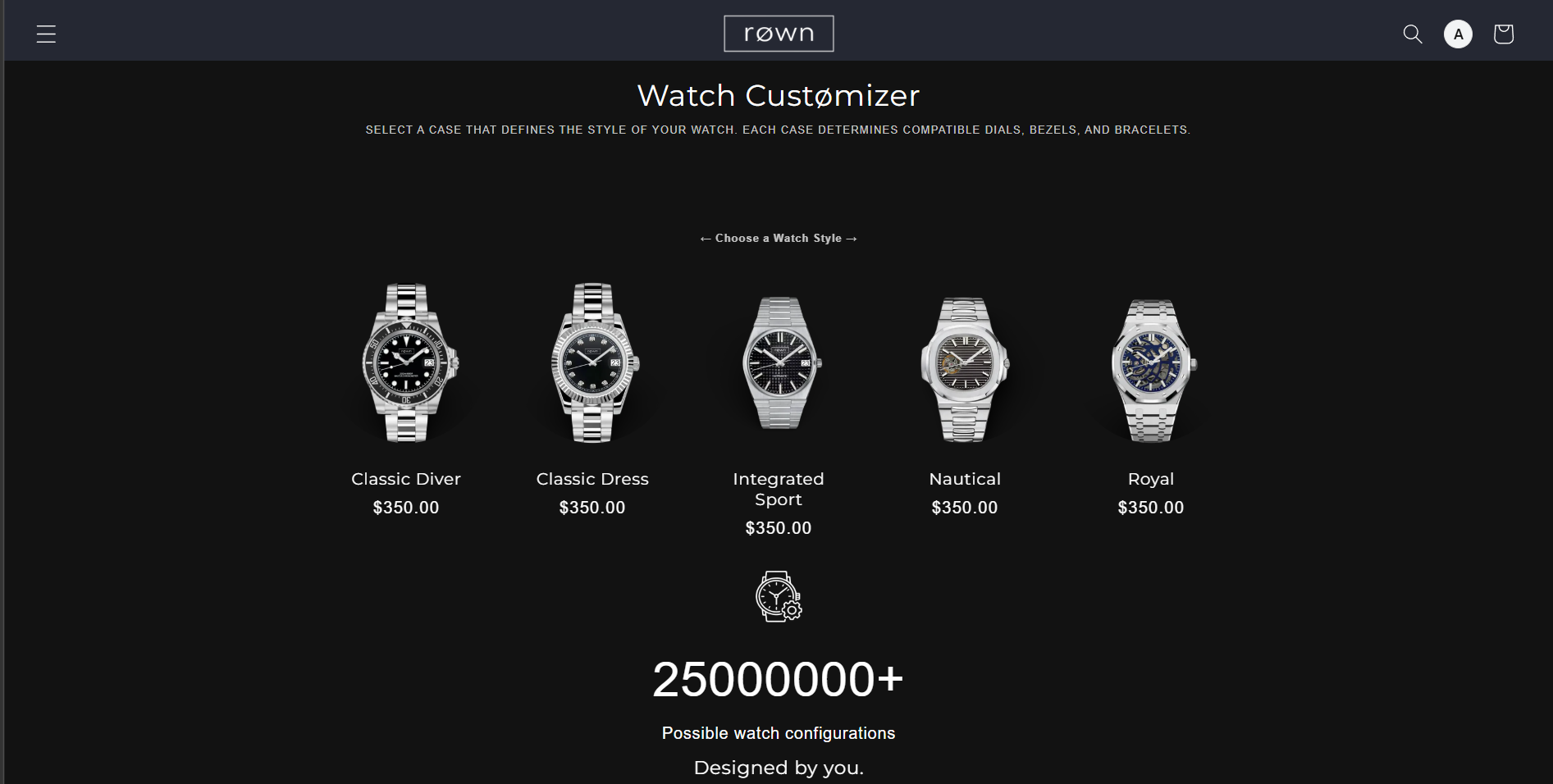
At Røwn, you can explore curated collections of men’s artisanal watches and women’s artisanal watches, or go further and design a custom diver watch from the ground up. Every option is built around the same principle: your timepiece should be as individual as you are. With free shipping and a team that understands both craft and customization, Røwn makes the artisanal experience accessible without compromising on quality.
Frequently asked questions
How do I know if a watch is truly artisanal?
Look for hand-finishing and custom work such as engraved casebacks, hand-applied indices, and visible tool marks under magnification. Authentic artisanal watches are typically produced in limited numbers by identifiable makers.
Why are artisanal watches more expensive than mass-produced ones?
Time-intensive craftsmanship and premium materials drive the cost up significantly. Each piece demands more skilled labor, rarer inputs, and far fewer units produced, which means the price per watch is naturally higher.
Is it possible to customize every aspect of an artisanal watch?
Most artisans allow you to select materials, engravings, and dial designs, but some elements are limited by technical constraints. Movement geometry, for instance, affects what case dimensions and dial configurations are possible.
Do artisanal watches hold their value better than mass-produced models?
Small-batch, unique pieces often retain or increase in value over time, particularly those from recognized makers. Provenance, condition, and rarity are the key variables that determine long-term value.